WORLD NEWS
World Cup opening: who expects the money and who actually spends it
Checked on
- Checked at: 2026-06-12 15:40 KST
- Source basis: FIFA World Cup 2026 tournament page, FIFA opening-match coverage, FIFA socioeconomic impact analysis, LA World Cup 26 official economic impact report
Who this is for
- People who want a plain-English view of why the World Cup opening is such a big story beyond the match itself
- Travelers, students, workers, and residents connected to host cities in the U.S., Canada, or Mexico
- Readers who keep seeing giant economic-impact numbers and want to know what those numbers really mean
- Fans who are interested in the opening buzz, but also in the cost and city impact behind it
Start here
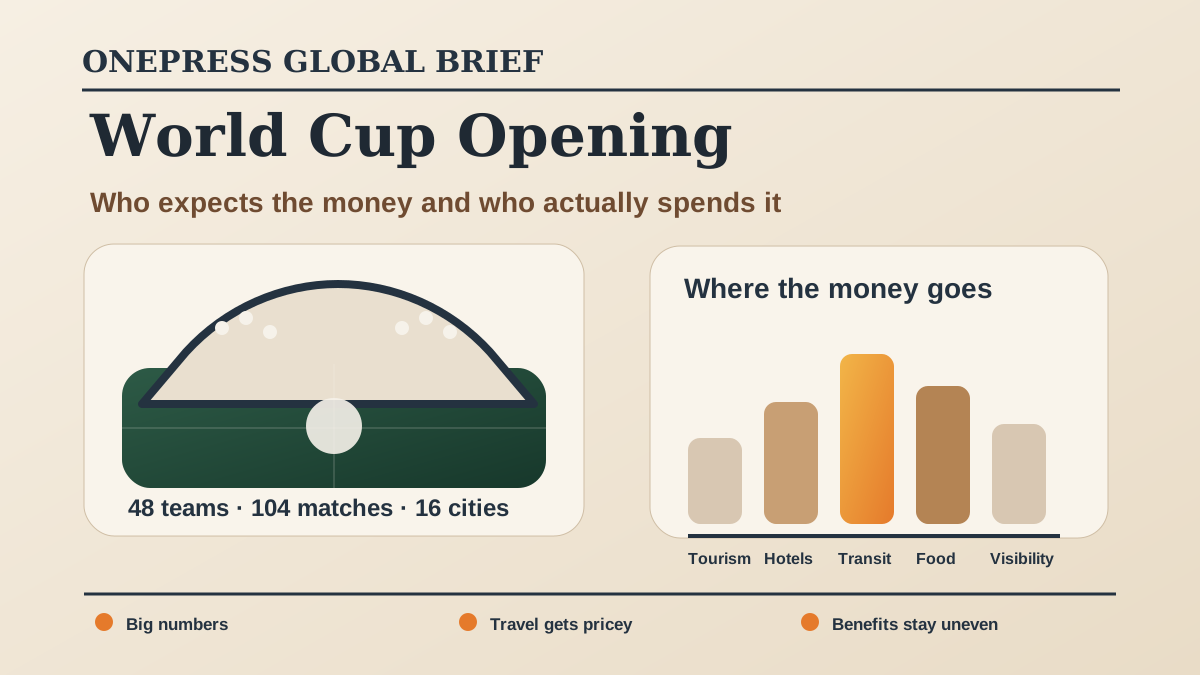
FIFA says the 2026 World Cup is the biggest edition ever: 48 teams, 104 matches, and 16 host cities across the United States, Canada, and Mexico. The opening match was staged in Mexico City on June 11, 2026, and FIFA’s impact material projects total attendance at about 6.5 million people.
That scale makes the tournament easy to talk about as a giant economic win. FIFA’s 2025 socioeconomic impact analysis estimates roughly USD 40.9 billion in global GDP impact and USD 80.1 billion in gross output from the tournament. For the United States alone, the same analysis estimates about USD 17.2 billion in GDP impact and USD 30.5 billion in output. FIFA has also separately highlighted projected economic gains for Canada.
But this is where interest and reality start to split. Big-event impact numbers often describe what may flow through tourism, hospitality, transportation, operations, and event spending. That is not the same as saying every resident in a host city feels richer or more comfortable during the tournament. The point of this briefing is not to dismiss the hype, but to explain who is expected to benefit, who is likely to spend more, and why the biggest numbers do not automatically match personal experience.
Three things worth knowing now
- The World Cup’s economic upside is usually concentrated in tourism, hotels, transport, food service, retail, and event operations rather than spread evenly across a city.
- For visitors, the real spending pressure often comes less from the ticket itself and more from lodging, airport transfers, local transport, and matchday food and crowd pricing.
- Economic impact projections are city-level or country-level estimates, not direct promises of household benefit.
Why people care right now
First, the tournament is structurally different from past editions. It is larger, longer, and spread across three countries. That alone makes the opening more than a football story.
Second, the money story is part of the event’s public identity. FIFA’s material emphasizes visitor spending, operations, tax effects, and job creation. The LA World Cup 26 official economic impact report, for example, projects up to USD 594 million in economic impact for Los Angeles County, including about USD 343 million in direct spending from out-of-town visitors.
Third, people increasingly question whether mega-events benefit whole cities or mostly specific sectors. The global attention, media value, and visitor traffic are real. So are higher hotel prices, crowding, transit strain, and uneven local gains. That tension is part of what makes the opening economically interesting even for people who are not following every match.
Three common situations
1. You are traveling to a host city
Your biggest cost may not be the ticket. Lodging minimum stays, event-period pricing, airport congestion, local transit demand, and matchday spending can push the total trip cost much higher than expected.
2. You live in a host city
You may hear large economic-benefit numbers while mainly experiencing traffic controls, crowd pressure, reservation shortages, and shifts in daily movement. City-level gain and personal convenience are different things.
3. You are only following the story from abroad
In that case, the useful question is not whether the numbers are big. It is what kind of numbers they are. GDP impact, gross output, visitor spending, tax revenue, and job support figures are not interchangeable.
Practical checks
- When you read a World Cup economic claim, check who produced it and what indicator it is using.
- Separate GDP impact, gross output, tax effects, and visitor spending instead of treating them as one number.
- If you plan to visit a host city, budget lodging and local movement before you budget souvenirs.
- If you live near a venue, look at crowd timing, route changes, and service pressure before the event peaks.
Easy to miss
Economic impact models usually focus on new spending and multiplier effects. Residents often notice something else first: price pressure, congestion, and uneven benefits by neighborhood and industry. That is why “the city benefits” and “daily life feels better” are not the same claim.
Co-hosting also changes the picture. Sharing the tournament across three countries spreads infrastructure pressure, but it can also spread symbolic and commercial concentration. A bigger tournament does not mean every host city experiences the same kind of payoff.
Official links
- FIFA World Cup 2026 tournament page: https://www.fifa.com/en/tournaments/mens/worldcup/canadamexicousa2026
- FIFA opening match and host-city note: https://www.fifa.com/en/tournaments/mens/worldcup/canadamexicousa2026/articles/estadio-azteca-mexico-city-host-opening-match-world-cup-2026
- FIFA matchday-one preview: https://www.fifa.com/en/tournaments/mens/worldcup/canadamexicousa2026/articles/preview-matchday-one
- FIFA socioeconomic impact analysis PDF: https://digitalhub.fifa.com/m/152f754a8e1b3727/original/FIFA-World-Cup-2026-Socioeconomic-impact-analysis.pdf
- LA World Cup 26 official economic impact report PDF: https://losangelesfwc26.com/wp-content/uploads/2024/06/FINAL-FWC-26-LA-Economic-Impact-Report-Micronomics-2024-06-25.pdf
Common questions
Q. Are FIFA’s economic numbers automatically reliable as lived reality
They are useful as structured estimates, but they are not the same thing as personal gain. The numbers need to be read by category.
Q. Do all residents in a host city benefit equally
No. Benefits and pressures can vary sharply by industry, location, rent exposure, and daily travel pattern.
Q. What may feel most expensive for visitors
Often lodging, local transport, and surrounding event-day spending rather than the ticket alone.
Q. Does that mean the event economics are fake
Not necessarily. It means citywide economic totals and household-level experience should be treated as different measures.
One-line takeaway
The World Cup clearly moves big money. The harder question is whether that money feels like a shared city celebration or a concentrated event economy around visitors and specific sectors.