WORLD NEWS
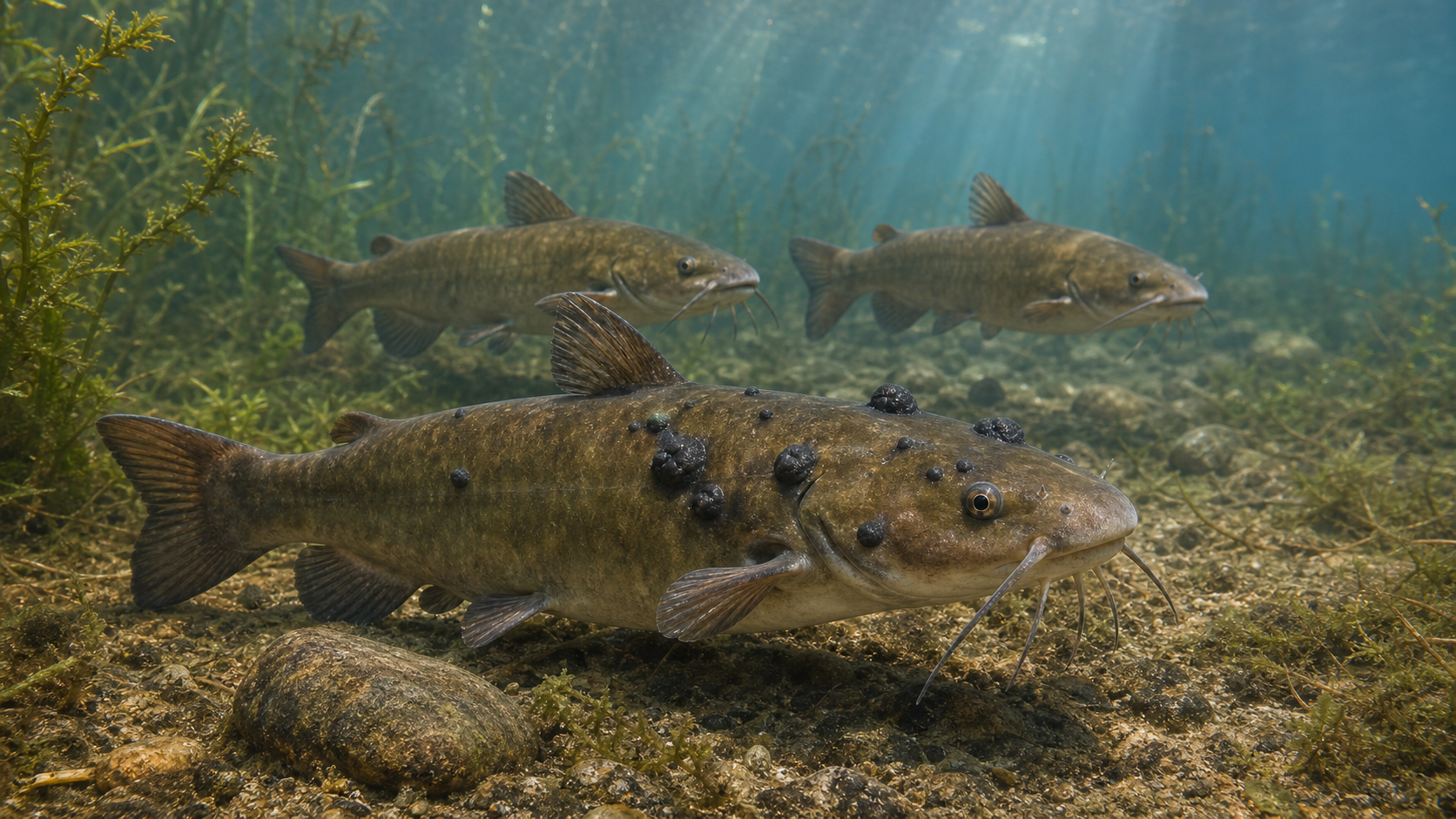
Cancer can spread? “Living cancer cells” moved from catfish to catfish
The black tumours found in multiple freshwater catfish did not arise independently inside each fish.
Genomic evidence shows that a cancer-cell lineage originating in one animal moved between hosts, the first naturally occurring transmissible cancer documented in a fish and freshwater ecosystem.
The cancer cells were the infectious agent
Researchers studied brown bullheads from Lake Memphremagog, which spans Vermont in the United States and Quebec in Canada. Mitochondrial and nuclear genomes from the tumours were far more closely related to one another than to the fish carrying them.
That pattern differs from a virus causing separate cancers in separate animals. The cancer cells themselves appear to persist as a living lineage that changes hosts.
Why this is a first for fish
Naturally occurring transmissible cancers had been confirmed in dogs, Tasmanian devils and several bivalves. This finding extends the phenomenon to fish and a freshwater environment.
Earlier sampling found raised melanomas in 23% to 37% of brown bullheads sampled from 2014 to 2017, and the same lineage appeared in material collected across several years.
No one yet knows how it spreads
Brown bullheads gather closely during spawning and lack scales, making transfer through skin, gills or the mouth plausible. Cells shed into water or sediment are another hypothesis, not a demonstrated route.
The lineage’s birthplace and age, its lethality and its effect on fish abundance are also unresolved.
This does not mean cancer is spreading to people
The study concerns one cancer-cell lineage moving within a particular catfish species. There is no evidence that it infects people, other animals or drinking-water users.
Transmissible cancers are rare because living cells must cross into another body, escape immune rejection and establish new tissue.
The next question is how far it has travelled
Researchers now need to compare tumours from brown bullheads in other North American waters. Wider genomic sampling and a molecular clock could reveal when and where the lineage began.
Only after its range and population effects are known can managers assess whether movement or stocking controls are warranted.
Official primary sources
Primary source: Nature original research
Primary source: University of Vermont research release
Primary source: USGS background study on brown bullhead melanomas