WORLD NEWS
WWF’s wildlife index falls 73%; that does not count all animals lost
WWF’s 2026 report says an index combining monitored wild vertebrate population trends declined 73% between 1970 and 2022.
This does not mean that 73% of all animals on Earth disappeared or that 73% of animal species became extinct.
What goes into the index
The assessment uses 35,803 population trends from 5,790 species. A population is a group of the same species living in a particular area, so one species can contribute records from several places. The index combines proportional increases and decreases using a weighted geometric mean. It is different from adding up every animal: an individual in a large group and one in a small group are not simply counted together as a global total.
Freshwater, land and sea show different trends
The index reports declines of 85% for freshwater, 69% for terrestrial and 59% for marine populations. These are changes in indices of monitored groups, rather than losses in the total number of animals in each environment. WWF identifies pressures including habitat loss and degradation, overexploitation and climate change. The differences invite investigation of where pressures are greatest, but the index alone cannot establish every cause in a particular location.
Why another 73% does not show stability
The headline figure in the 2024 report was also 73%, but the new edition changes the data and monitoring period. Subtracting those two headlines does not establish zero change over the last two years. Our World in Data explains that increasing and stable populations are also included, while the magnitude of declining trends pulls down the aggregate. A large long-term decline and individual conservation recoveries can exist together.
The gaps when reading the current picture
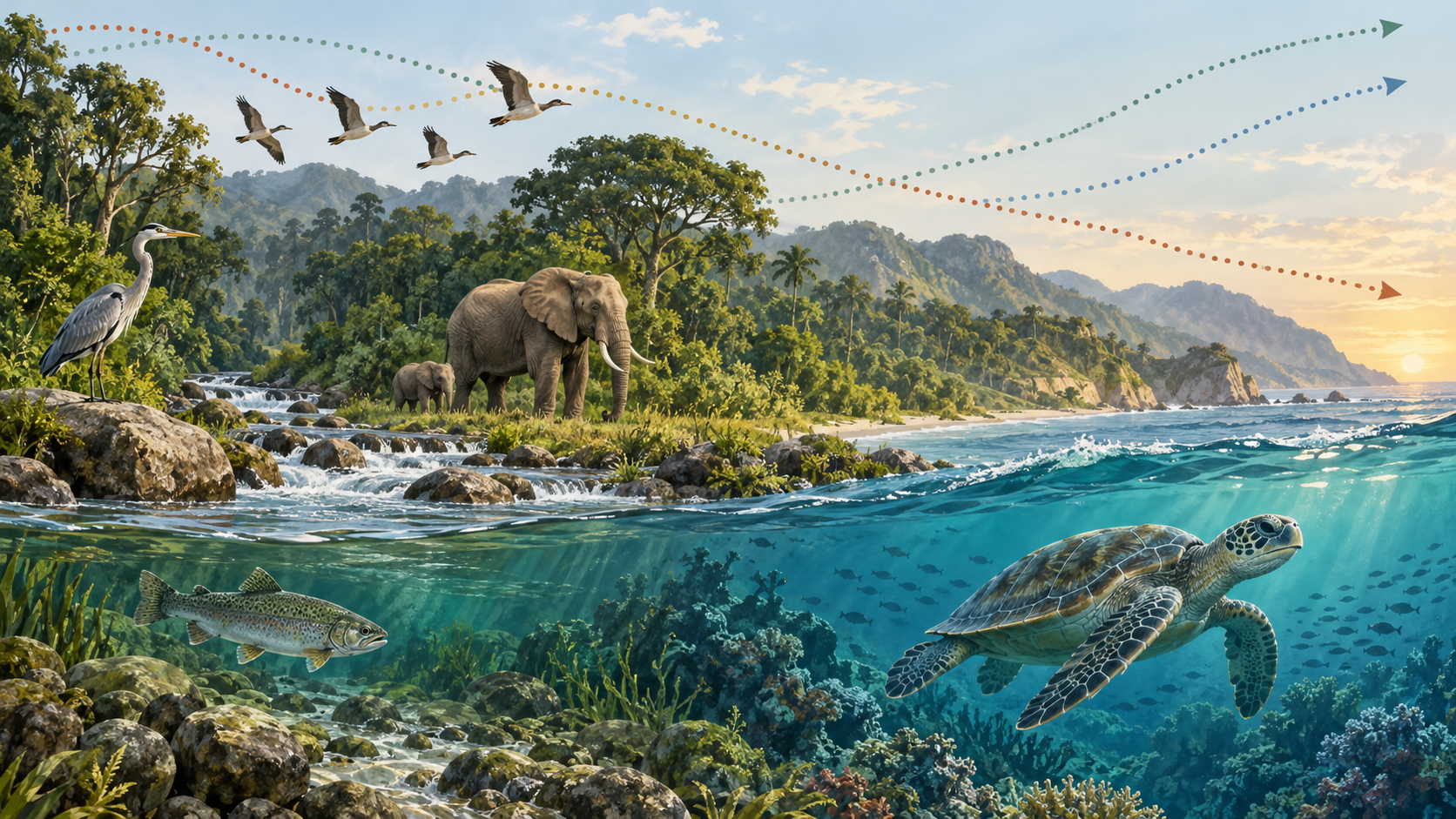
Publication in 2026 does not mean observations extend through 2026: this comparison ends in 2022. Monitored vertebrates also do not represent every organism, including insects. Readers can next examine species and regional data, the calculation method and follow-up monitoring of conservation projects. The dotted lines in the explanatory illustration symbolize different trends and are not an actual chart of the index.
Primary source and independent checks
Primary source and official explanation: WWF
Primary source and official explanation: University of Exeter
Independent reporting check: Our World in Data
Read in other languages
한국어 · English · Español · 日本語 · Tiếng Việt