WORLD NEWS
Webb reads mineral clues to giant collisions in dusty disks
Researchers used Webb and other telescope data to analyze minerals in dust around stars and trace possible large collisions.
They inferred past events from debris composition rather than directly filming a collision.
What was observed?
NASA and ESA described the research on October 1. The team combined James Webb and Spitzer telescope data to examine 21 exceptionally dusty debris disks. A disk here is a distribution of small particles orbiting a star. This does not mean all 21 were discovered this week or observed exclusively with Webb.
How can minerals reveal a collision?
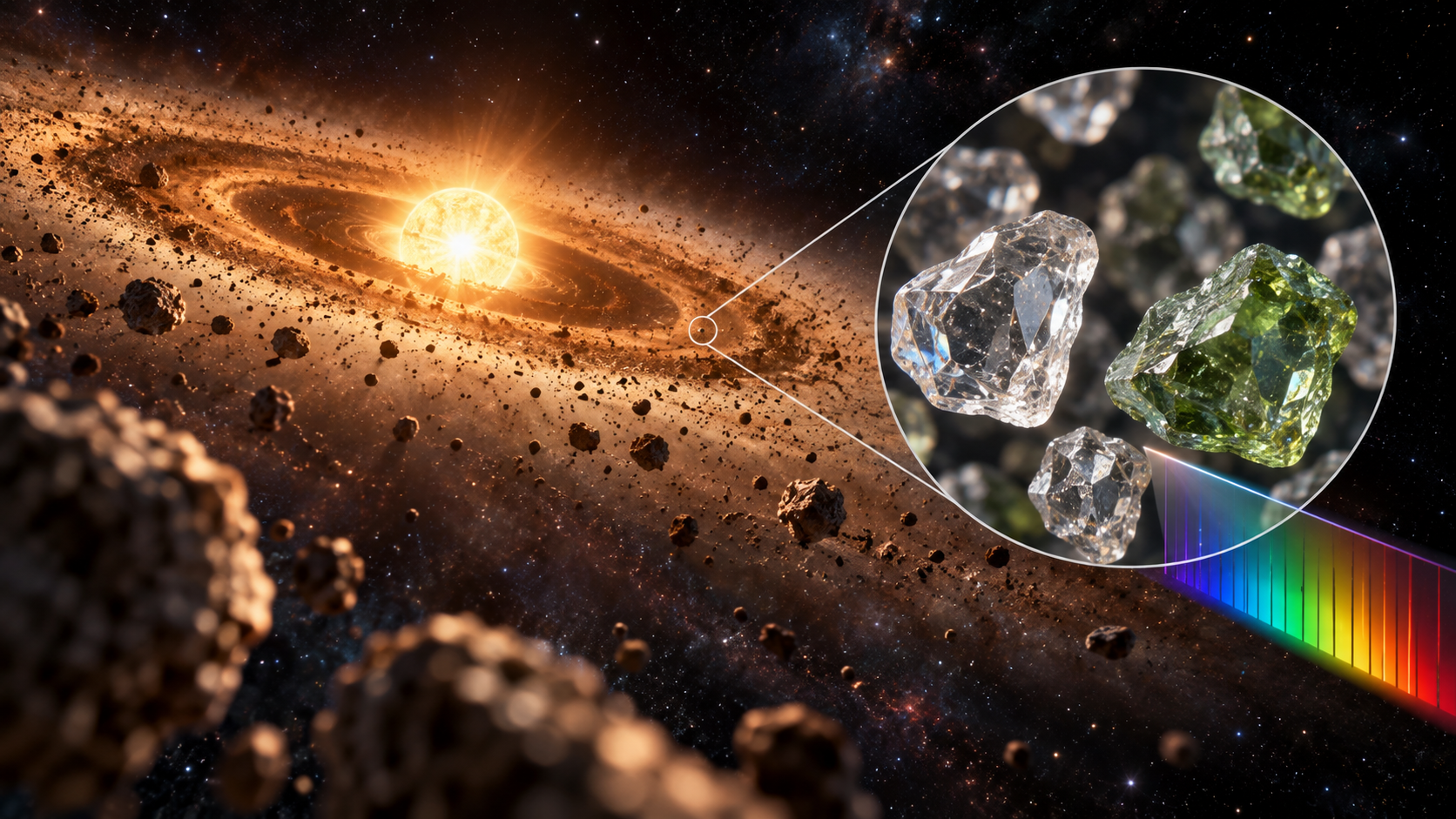
Different minerals leave characteristic features in infrared light. Separating that light into a spectrum allows researchers to infer composition. The study distinguishes silica-rich dust from relatively silica-poor material. Collisions powerful enough to melt or vaporize rock can leave different traces from other impact conditions. Dust is evidence for reconstructing an event, not footage of the event itself.
How far does the inference reach?
The researchers interpret mineral differences in terms of energetic impacts involving large bodies and collisions involving smaller bodies, among other conditions. They did not directly measure the exact size, speed or time of each impact. Silica-rich disks around young stars also inform the interpretation. Since the sample selects unusually dusty systems, it cannot establish collision probabilities for every star.
Why does this help explain planet formation?
Bodies can merge or break apart as planetary systems develop. Identifying observable debris allows those processes to be compared with models. The observations help test links between impact energy and the minerals left behind. Further checks include spectra of other disks, brightness changes over time and collision simulations. The finding does not indicate a new impact threat to Earth.
Primary source and independent checks
Primary source or announcement: NASA
Institutional or data check: ESA Webb
Additional primary source or independent check: Research manuscript
Additional primary source or independent check: HotHardware
Read in other languages
한국어 · English · Español · 日本語 · Tiếng Việt