WORLD NEWS
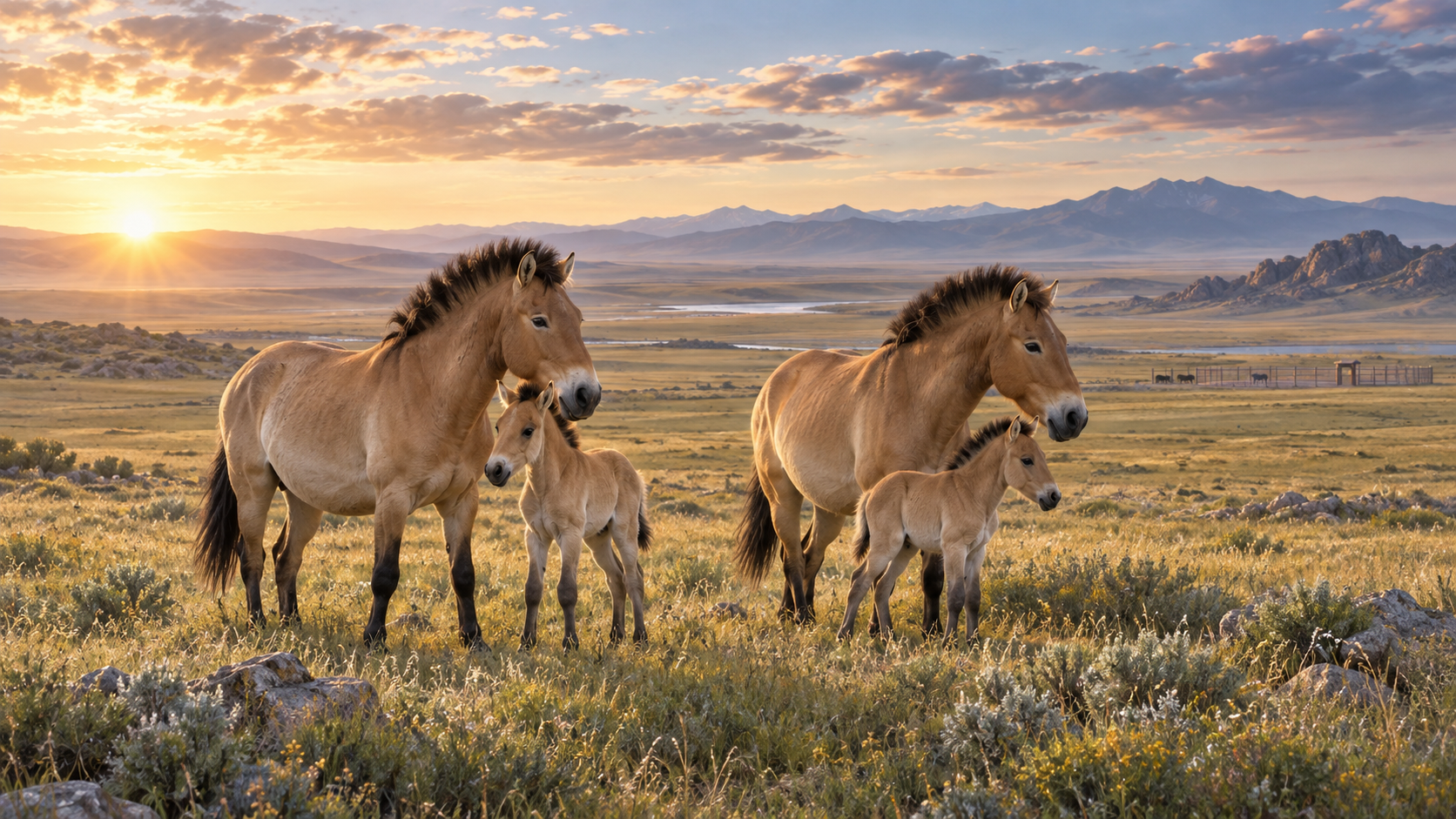
Przewalski’s horse foals born in central Kazakhstan after about 200 years
The first foal was born to Tessa on 22 August and the second to Umbra on 30 August; both mares moved from Berlin in 2024.
Early reports say both foals are healthy, showing the project has reached reproduction, but survival, genetics and full release require years of monitoring.
How did the project begin?
The international project led by Prague Zoo moved the first seven horses in 2024 and added four mares and four stallions in 2026. They acclimatised in large enclosures.
Why “about 200 years”?
The species vanished from the wild in the late twentieth century and survived through zoo breeding. After Mongolia and China, Kazakhstan could become the third country with a restored population.
What comes next?
The consortium aims to release 40–45 horses into the Turgai steppe by 2029. These births are one necessary step, not completion of that goal.
Ecological meaning and limits
Large grazers can keep vegetation short and disperse seeds, helping steppe restoration. Two births alone cannot prove ecosystem effects or population independence; veterinary, genetic and habitat monitoring must continue.
Primary source and independent checks
Read in other languages
한국어 · English · Español · 日本語 · Tiếng Việt