WORLD NEWS
A different EFEMP1 variant points to peripheral, not central, retinal disease
Researchers found that a different site in the same EFEMP1 gene can preferentially affect peripheral and low-light vision while central vision stays relatively preserved. The paper appeared online in JAMA Ophthalmology on 10 September 2026.
This was a rare case series from three unrelated families. Prevalence, individual prediction and effective treatment remain unknown.
Difference
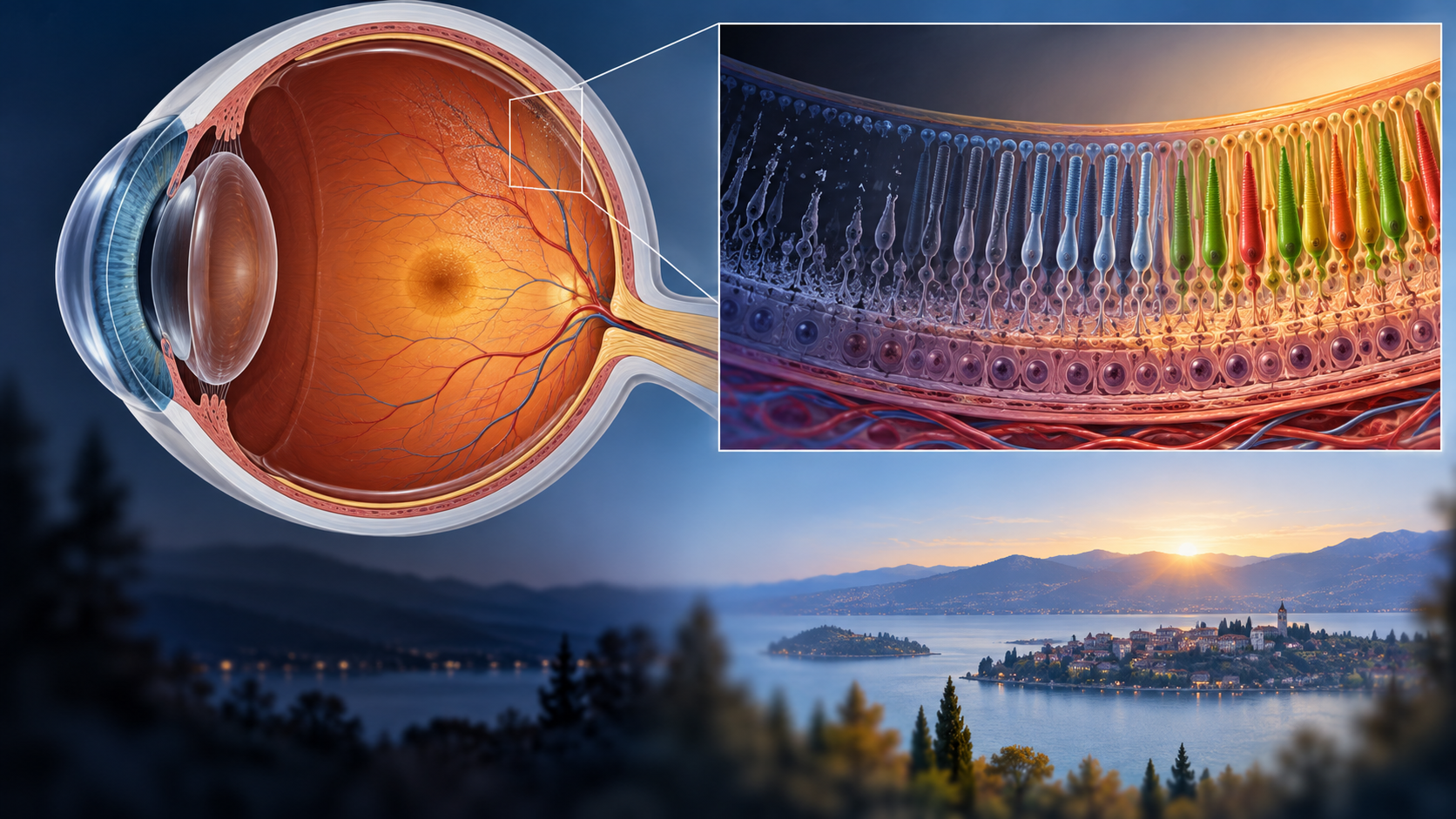
The known p.Arg345Trp disorder tends to affect the central macula. The p.Arg140Trp pattern involved night blindness after midlife and peripheral atrophy with prolonged central preservation.
Early signal
Four carriers among five at-risk relatives had delayed rod dark adaptation despite 20/20 corrected vision and a normal-looking fundus.
Evidence
Sequencing, family segregation, imaging, light- and dark-adapted field tests and protein experiments were combined. Clinical course still varied.
Clinical meaning
Specialist evaluation may need peripheral function and dark adaptation when family history and late-onset night problems fit. This is not a self-diagnosis rule.
Next
Larger cohorts must establish frequency and penetrance; long follow-up must test how far functional change precedes structural loss.
Primary source and independent checks
University Hospital Bonn 독립 기관 설명
Read in other languages
한국어 · English · Español · 日本語 · Tiếng Việt