WORLD NEWS
All 19 Svalbard glacier rivers were methane-supersaturated — bedrock was the key
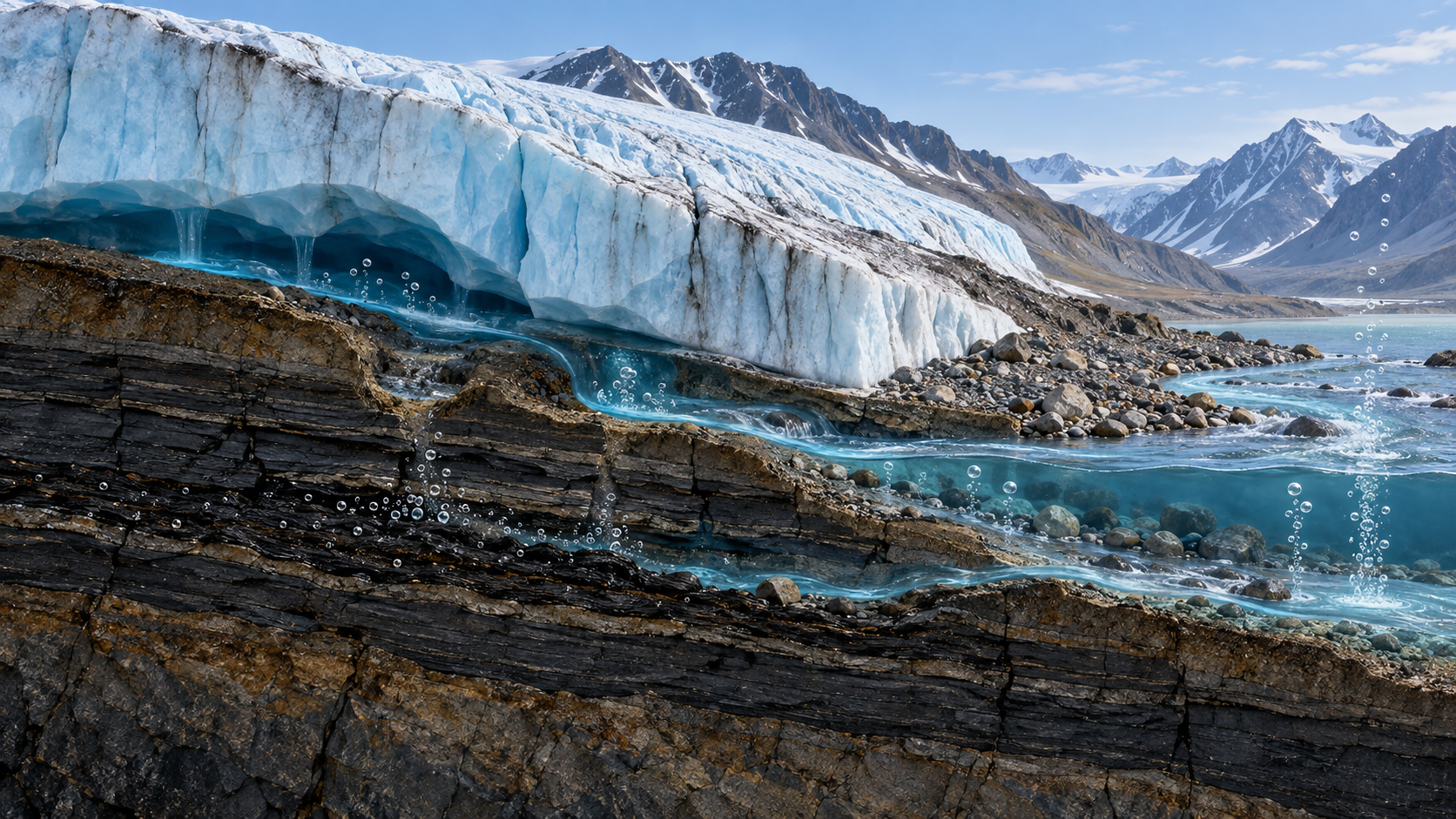
Researchers sampled rivers from 19 land-terminating glaciers in central Svalbard and found methane above atmospheric equilibrium in all 148 water samples. Peak concentration reached 425 times equilibrium, while isotopes and associated gases pointed mainly to ancient geological methane flushed from organic-rich shale beneath the ice.
This is not evidence that every melting glacier releases a huge methane pulse. The study estimates 182–368 tonnes a year transported by Svalbard meltwater rivers, small compared with human emissions. Methane-rich geology and a thawed, water-connected glacier bed must coincide.
What was measured?
Terminus concentrations ranged from 9 to 1,700 nanomolar. Carbon isotopes plus ethane and propane support a mainly thermogenic, geological source rather than newly produced microbial methane.
Why does bed temperature matter?
Surface meltwater can descend through cracks and wash gas from fractured shale. A bed that freezes as a glacier shrinks may instead disconnect the drainage and reduce transport.
What does 425 times mean?
It is the maximum dissolved-water concentration relative to atmospheric equilibrium, not a 425-fold rise in the atmosphere or the value of every sample.
Where might this apply?
Other glacier regions over organic-rich rocks are candidates, but crystalline bedrock and frozen beds cannot be assumed to behave the same way.
What remains unknown?
Seasonal and year-to-year fluxes need longer measurements combining bed geology, thermal state and river discharge.
Primary source and independent checks
Read in other languages
한국어 · English · Español · 日本語 · Tiếng Việt