WORLD NEWS
El Niño is almost certain through February 2027, WMO says it will become “very strong”
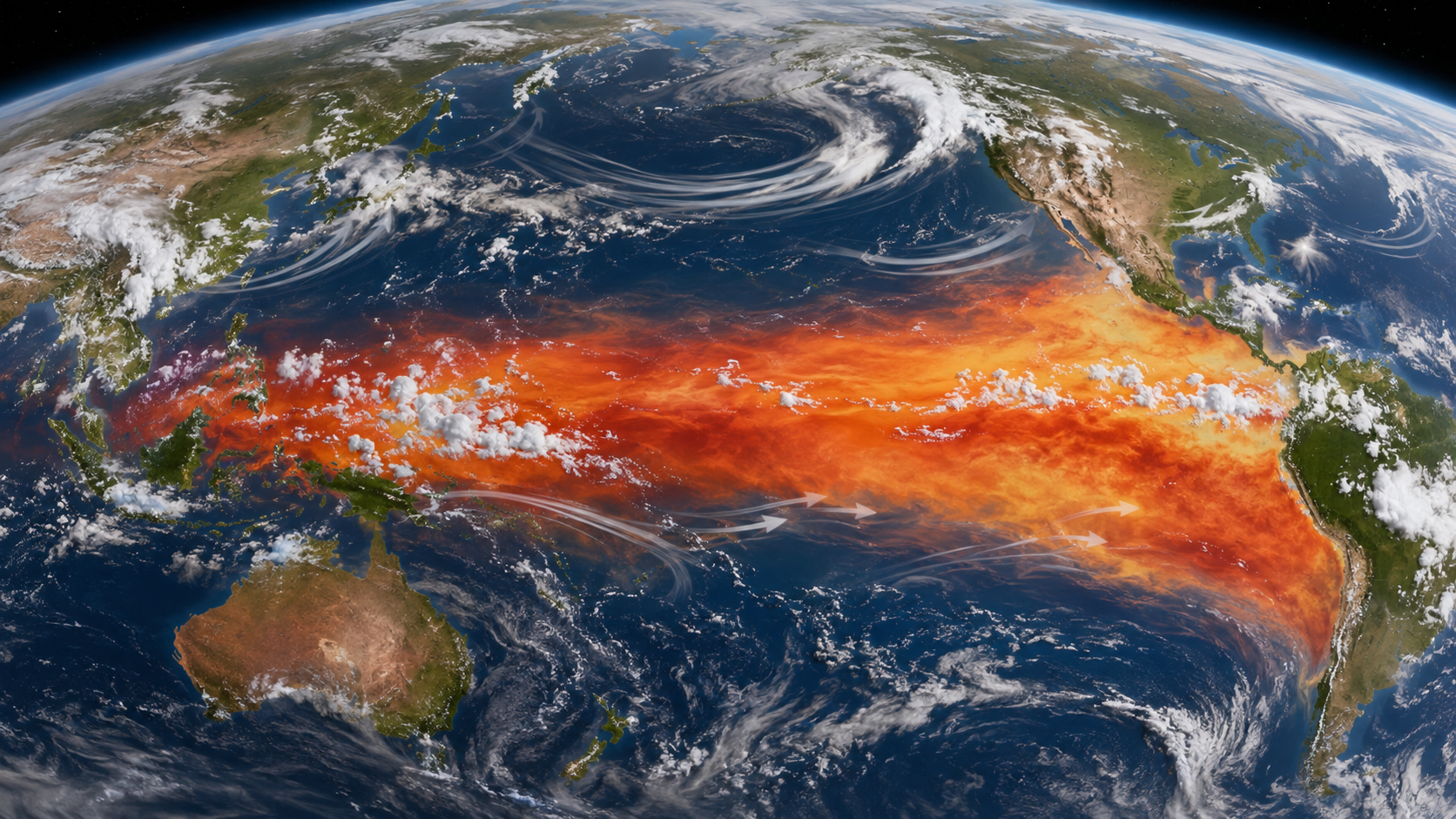
The World Meteorological Organization (WMO) said on September 3 that El Niño is firmly established and is expected to peak at “very strong” intensity toward the end of 2026. Seasonal prediction systems put the likelihood of it persisting through February 2027 at nearly 100%.
This does not mean every place will be equally hot or face floods and droughts of the same severity. El Niño’s strength is a risk signal, while actual impacts depend on location, season, conditions in the Indian and Atlantic oceans, and local preparedness.
What changed in the latest outlook?
At the end of July, WMO expected El Niño to strengthen. The new regular update goes further: it forecasts very strong intensity and says persistence through February 2027 is nearly certain. The Niño 3.4 sea-surface temperature anomaly averaged +1.5°C from May through July and reached +2.0°C in July. Reinforcing ocean and atmosphere signals, together with agreement across models, support the high confidence.
What does “nearly 100%” mean?
It is not the chance that a disaster will strike a particular city. It is the probability that tropical Pacific ocean and atmosphere conditions will continue to meet El Niño criteria. A persistent event can keep shifting the background pattern of global temperature and rainfall, but this number alone cannot identify the date or severity of a local heatwave, flood, or drought. Local short-range forecasts and seasonal outlooks remain essential.
What is expected from September to November?
WMO’s multi-model outlook shows increased odds of above-normal temperatures across nearly all land areas. Rainfall displays a pronounced El Niño pattern, with wetter and drier zones in different places. A positive Indian Ocean Dipole is also expected to develop, while the tropical Atlantic should remain generally warm. These factors can strengthen, weaken, or shift the usual El Niño effects by region.
What should people and institutions check now?
Agriculture, health, water, energy, and emergency agencies should combine the global outlook with regional seasonal forecasts. Individuals should not make travel or livelihood decisions from the El Niño label alone. Check heat, drought, flood outlooks and early warnings from the meteorological service where you live. WMO likewise directs readers to national services and regional climate centres for locally useful detail.
What remains unknown?
The exact sea-surface temperature anomaly at the peak, the location and timing of individual extremes, and the rate of weakening after spring 2027 are not settled. El Niño is a natural fluctuation operating on top of human-caused long-term warming, so this event will not simply repeat a past one. Future WMO updates and monthly regional outlooks should be checked against observations.