WORLD NEWS
If we abandon farmland, will the number of birds increase or decrease? The answer depends on what kind of birds were originally abundant in the area.
As a result of analyzing 199 rural areas in Japan and existing studies on four continents, we were able to explain whether the number of bird species increased or decreased in land where farming was abandoned by the type of bird lifestyle that was originally dominant in that area. There was a downward trend in places where many birds used open land and water’s edge, and an increase in places where many birds used wetlands and forests.
This does not mean that abandoned farmland is always good or always bad for nature conservation. The study mainly compared the number of bird species and functional groups, and did not judge other values, such as population, reproductive success, invasive species, fire risk, or agricultural production, as a single indicator.
Where and how did you compare?
The researchers compared two hectares of abandoned, traditional and intensive farmland across Japan. We surveyed breeding and wintering birds, including on land that had been abandoned for less than 50 years, and meta-analyzed results from other parts of the world to see if the same explanation held true.
Why does the same neglect produce opposite results?
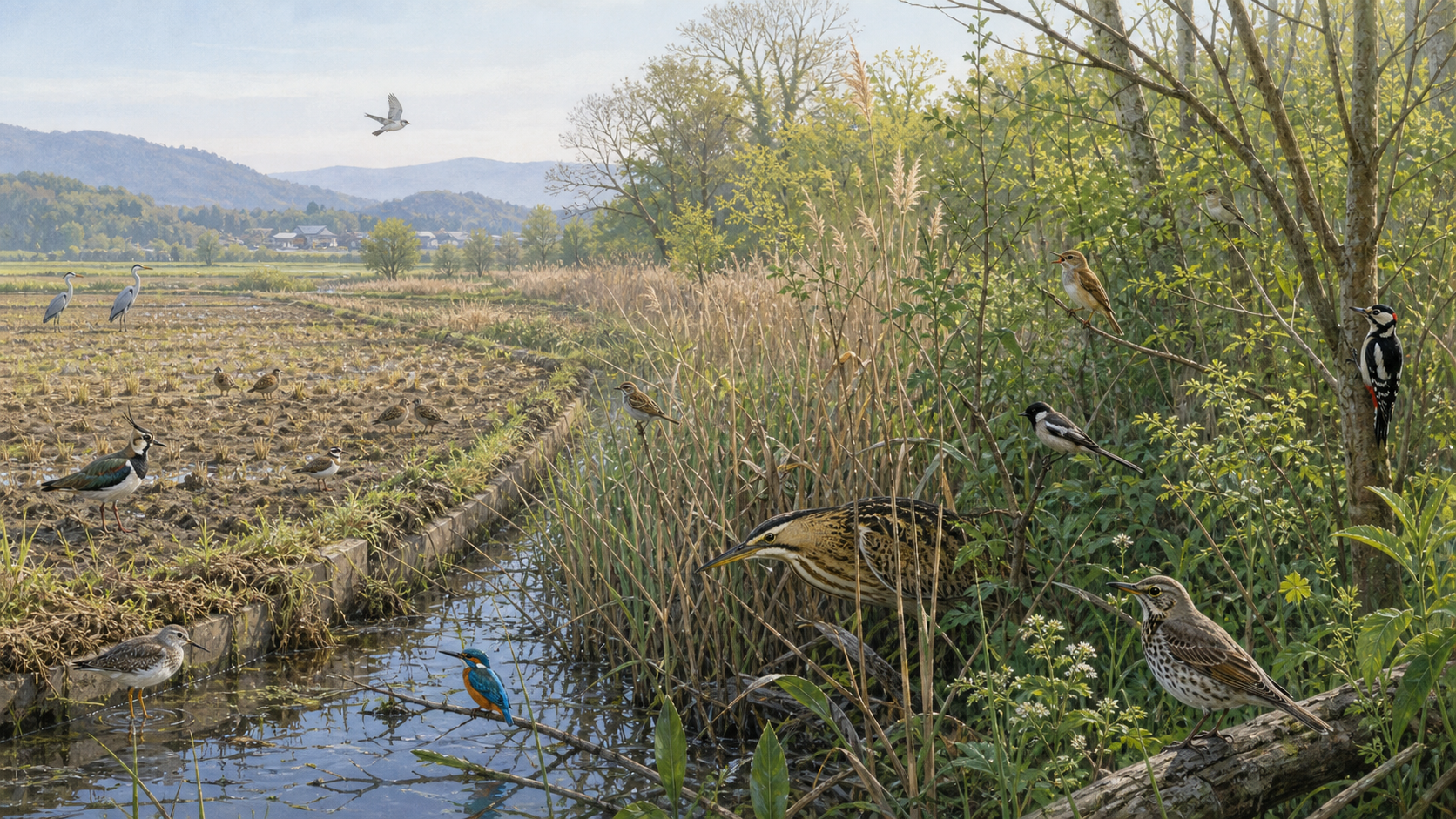
When farming stops, water accumulates and reeds grow in some places and become like wetlands, while in other places trees grow and become like forests. Conversely, birds that used bare ground or shallow rice paddies may lose the open space they need. Land location, drainage and surrounding landscape will change the results.
Did rare species also live?
A total of 87 species were identified in the Japanese survey, and breeding or wintering of endangered or near-endangered birds such as Akamozu, Sanka no Goi, and Ojishigi were observed in some neglected farmlands. This means that certain places may have high conservation value, but it does not mean that all abandoned farmland becomes a habitat for rare species.
How to use it in conservation policy
Knowing the lifestyles of local bird communities can help you prioritize where to maintain open agricultural land management and where to allow conversion to wetlands and forests. The researchers suggest the option of including high-value, neglected agricultural land in protected areas or other conservation measures. Ownership and rural livelihoods must be negotiated separately.
What’s left for next research?
We need to track the same areas for longer to see if initial neglect differs from changes decades later. We need to look at not only the number of bird species, but also their population, reproductive success, and changes in plants and insects. The key to this result is that rather than providing a single correct answer, the region’s dominant functional group was presented as a practical prediction signal.
Primary sources and independent checks
PNAS original paper (DOI 10.1073/pnas.2530120123)
National Institute for Environmental Studies official release