WORLD NEWS
This does not mean life was found at the lunar south pole: some shadows may let Earth microbes carried by astronauts survive for at least a day.
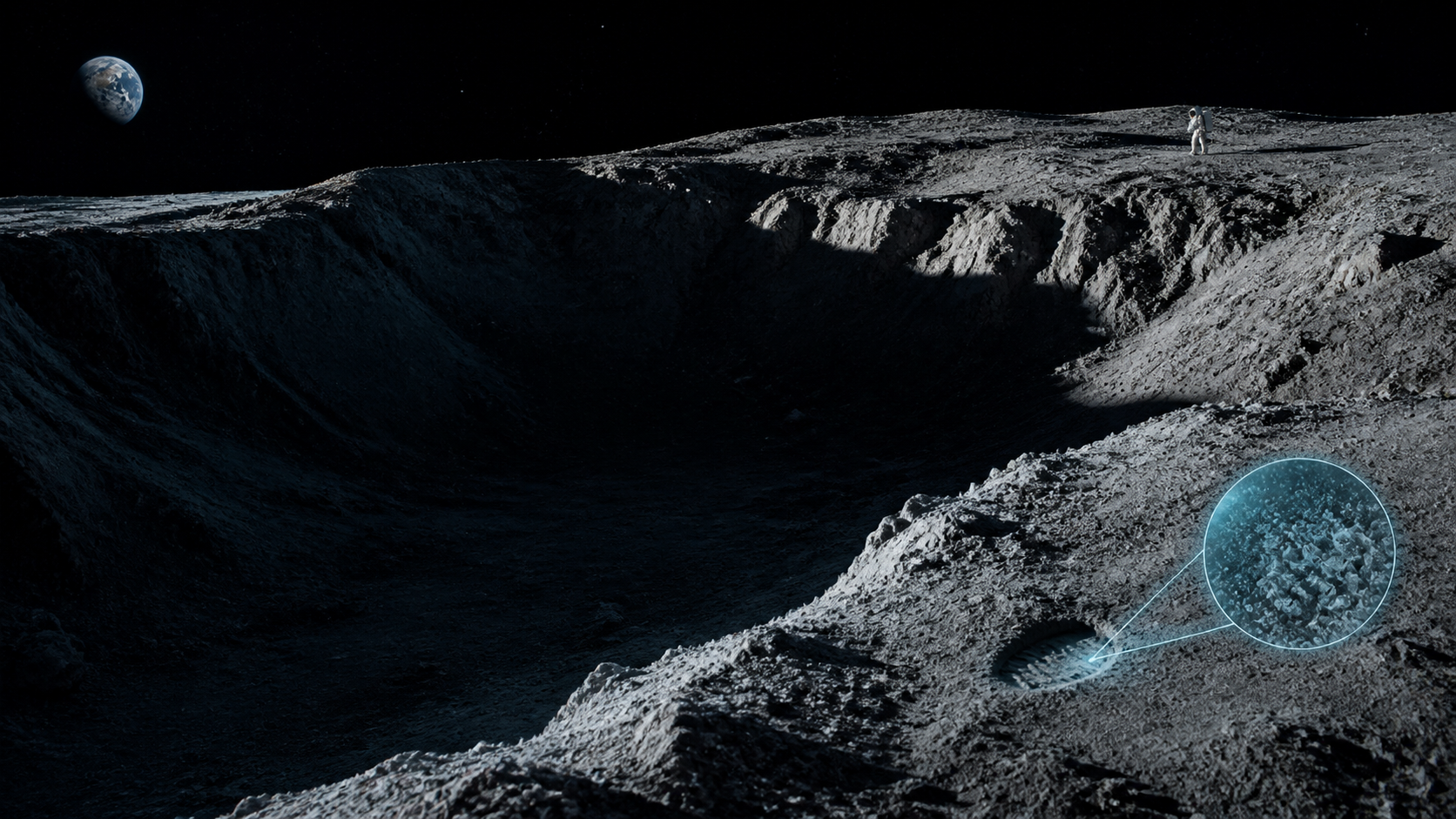
NASA researchers calculated that Earth microbes carried by humans or spacecraft could survive at least a day in some shadowy crevices of the lunar south pole. Candidate areas ranged from large crater floors to shadows the size of astronaut footprints.
These results do not mean that life has been discovered on the moon. Survival does not mean growth or reproduction, but rather cells holding on without dying, and the study is not based on actual lunar samples, but rather a model that combines environmental maps and existing survival limits.
What microorganisms did you look at?
The researchers selected bacteria and fungi commonly encountered on human skin and in the spaceflight environment. These included black yeast, Bacillus subtilis, Staphylococcus aureus, and radiation-resistant Deinococcus. The limits of ultraviolet rays, heat, and radiation that each microorganism can withstand were taken from existing experiments.
Where on the moon did you calculate it?
Three regions of the lunar South Pole were analyzed: the Nobil Rim, the Connecting Ridge, and the De Guerlache Rim. A surface radiation model was overlaid on height and temperature data collected by the Lunar Reconnaissance Orbiter. Shade reduced lethal ultraviolet rays and lowered temperatures, increasing the chances that some cells would survive for a while.
Why is it a problem for space exploration?
If astronauts make repeated visits to Antarctica in the future, Earth’s microorganisms may be left behind through their equipment and footprints. Later, when looking for organic matter or signs of life, it may become difficult to tell whether it’s the moon’s old chemistry or contamination from recent probes. Therefore, you must record the environment before visiting and manage the cleanliness of the equipment.
What don’t you know yet?
We have not directly tested how well each microorganism can survive on the actual lunar surface, where vacuum, radiation, and temperature changes occur simultaneously. The researchers also said there was no evidence that the moon had the conditions necessary for growth and reproduction. Viability maps are priority survey maps that require field verification.
What is the next verification path?
A future lunar South Pole mission could validate the model by directly measuring temperature, radiation, and contamination samples from the shadow. The point is not to claim that there is life on the moon, but to ensure that biological traces brought by humans are not mixed with scientific data.
Primary sources and independent checks
Science Advances original paper