WORLD NEWS
Divers responded that they did not touch the coral, but footage of the contact remained in the video.
A study of 732 divers on coral reefs in Southeast Asia showed that many participants overestimated their skills and had poor recall of coral encounters.
This does not mean that scuba diving is the biggest cause of coral reef decline, but the findings indicate that on-site damage can be reduced independently of global crises such as climate change and marine heat waves.
Who did you compare and how?
The researchers videotaped the participants’ underwater behavior at popular diving sites in Indonesia and the Philippines. Immediately after the dive, we were asked about their skill level, environmental behavior and whether they had come into contact with coral. Questionnaire answers were compared with actual videos to confirm differences in memory and behavior.
What behavior was the problem?
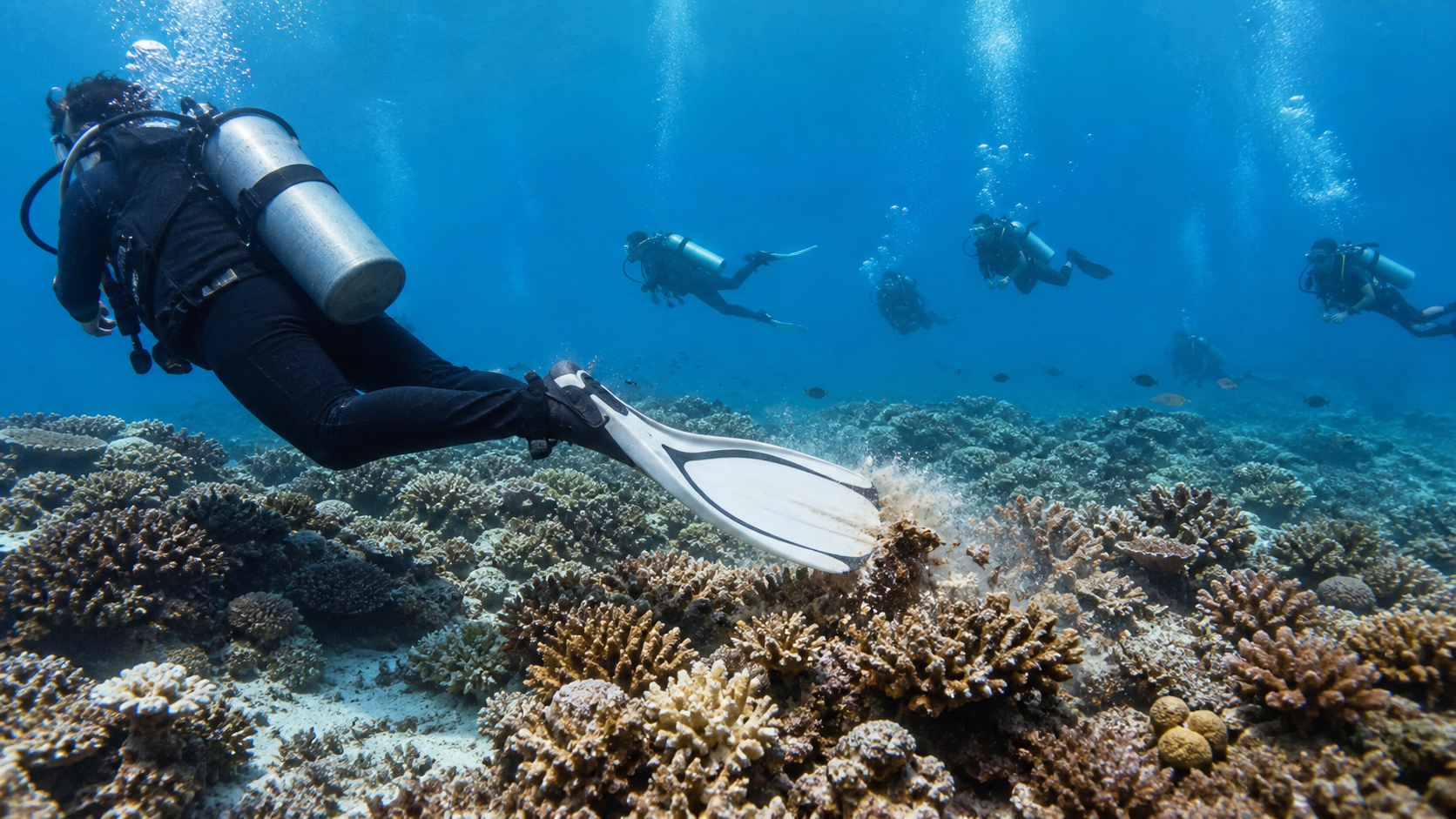
Pins, knees, and equipment have been observed touching coral and causing sediment. This contact can damage coral tissue and cause sediment to block light. The number of contacts was not well explained by experience credentials alone, and those who rated their skills highly were no exception.
Why is it so hard to figure it out on your own?
In the water, you have to pay attention to buoyancy, current, camera and companions at the same time. You may not be able to see where the pins or loose gear in the back reach. Since good intentions do not guarantee actual behavior, there are limitations to evaluating training based solely on post-start memory.
What can travelers change?
Checking buoyancy and equipment position before entering and keeping a sufficient distance from coral are the keys to reducing direct damage. Instead of just giving a short explanation, operators can observe initial behavior and provide specific feedback. The study does not represent an average for all divers or all regions.
What is the big picture?
Even if we reduce local contact, the problems of ocean warming and acidification remain. But reducing the pressures that tourism can control can give corals more room to withstand other impacts. Follow-up studies should determine whether video feedback changes behavior over the long term.
official source material
Conservation Science and Practice original study