WORLD NEWS
Comoros, Sao Tome and Principe, and South Sudan gain their first UNESCO World Heritage sites
Comoros, Sao Tome and Principe, and South Sudan have each received their first UNESCO World Heritage property.
The three inscriptions confirmed on July 28, 2026 span Indian Ocean urban history, colonial agriculture and forced labour, and a migration of about six million mammals; South Sudan’s property was simultaneously placed on the danger list.
The three first inscriptions
The World Heritage Committee, meeting in Busan, recognized three very different records of human and natural history.
- Comoros: six historic towns in the Medinas of the Historic Sultanates of the Comoros, covering 30.47 hectares and rooted at least in the 11th century.
- Sao Tome and Principe: six roças covering 72.9 hectares, documenting a colonial coffee-and-cocoa system based on forced migration and labour.
- South Sudan: the 11,236,800-hectare Boma–Badingilo landscape, including national parks, floodplains and savanna.
Why the South Sudan number stands out
Boma–Badingilo sustains an estimated six million white-eared kob, tiang and Mongalla gazelle moving with seasonal water and grazing conditions. The property is larger than South Korea.
It also entered the List of World Heritage in Danger in 2026. Recognition of global value does not mean that protection on the ground is already secure.
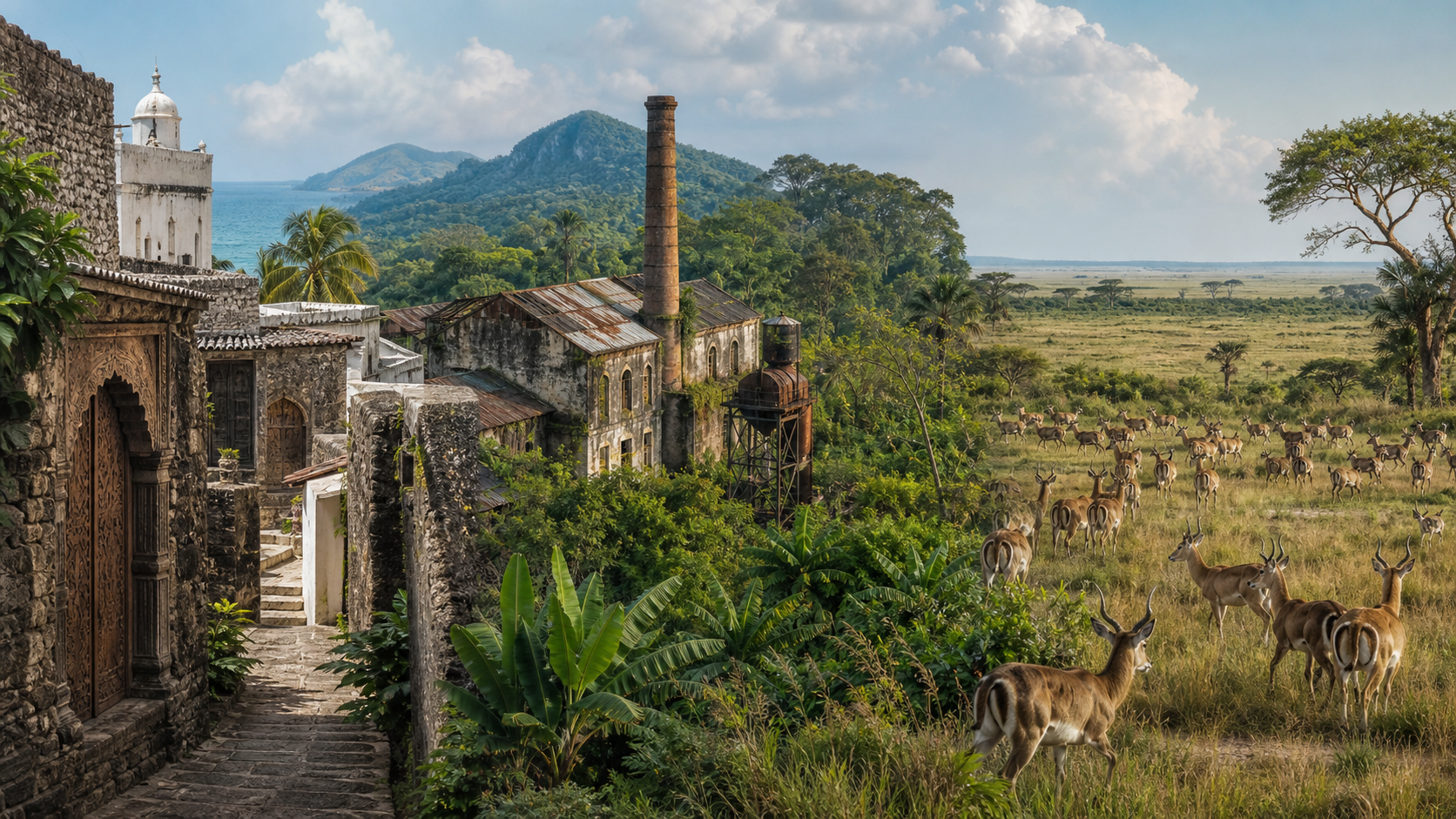
The histories added by two island states
The Comorian medinas show how Indian Ocean trade and migration shaped island urbanism alongside Islamic, matrilineal and matrilocal traditions that remain active.
The Sao Tome roças are not simply picturesque plantation architecture. They document a colonial agro-industrial system that relied on forced migration and labour to sustain global commodity production after slavery was abolished.
What inscription changes in practice
World Heritage status is closer to a conservation commitment than a tourism badge. States must protect outstanding universal value through law and management and report threats that could seriously damage it.
International assistance and expertise can become more accessible, but a title cannot replace local rights, safety, budgets or management capacity.
What still needs to be watched
The Committee session continues through July 29. The next test is not visitor growth but boundaries, buffer zones, community participation, threat monitoring and periodic reporting.
For South Sudan, follow-up evidence must show the conservation actions, field access and condition of migration corridors needed eventually to leave the danger list.
Official primary sources
UNESCO: announcement of the three countries’ first inscriptions
UNESCO List: South Sudan’s Boma–Badingilo Migratory Landscape
UNESCO List: Medinas of the Historic Sultanates of the Comoros
UNESCO List: the rocas of Sao Tome and Principe and forced migration