WORLD NEWS
The first privately operated robot built to repair GEO satellites has launched
The first privately owned operational robotic servicer designed to visit, inspect and upgrade multiple geosynchronous satellites launched on July 21.
It has not completed a repair: electric propulsion must raise its orbit for about a year before it demonstrates the work in space.
It is not a life-extension craft fixed to one satellite
RSGS rides on the Mission Robotic Vehicle and has two arms, each with seven joints, interchangeable tools, cameras, sensors and lighting. It is designed to move among satellites for inspection, upgrades, anomaly resolution and relocation.
Mission Extension Pods attached by the robot are intended to extend a satellite’s operating life by six or more years.
It targets hundreds of spacecraft 36,000 km up
Hundreds of communications, weather and security satellites occupy GEO. Functional spacecraft can be retired early when fuel runs out or equipment becomes obsolete.
Repeat servicing could turn satellites from disposable assets into maintainable infrastructure and reduce some replacement launches and debris.
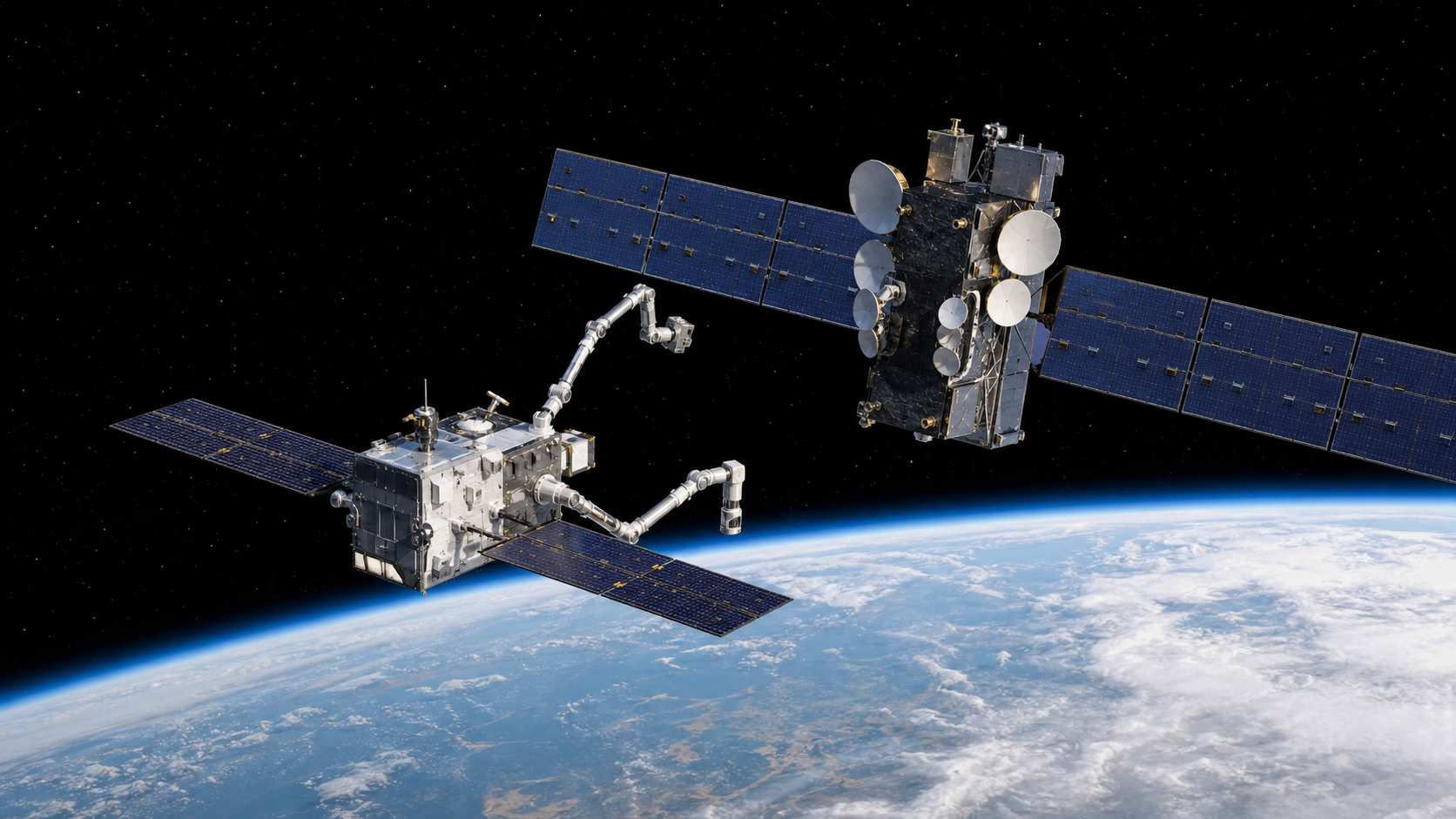
Government robotics moves into a commercial service
DARPA developed the robotic suite with the U.S. Naval Research Laboratory, while SpaceLogistics integrated it with the MRV and will own and operate the spacecraft. NASA supplies simulation, software analysis and flight robot operators.
After initial demonstrations, SpaceLogistics plans commercial servicing. The spacecraft’s expected operating life exceeds ten years.
A successful launch is not a successful repair
As of July 27, 2026, no customer satellite had been repaired or upgraded. Safe close approach, compatibility with satellites lacking standard interfaces and tool performance must still be demonstrated.
The six-year life extension is a design target for the propulsion pod, not a guaranteed result for every satellite.
What to verify next
The first demonstration must identify the target and task and show how performance changes afterward. Service prices, customer demand and repeat missions will determine whether a durable commercial market exists.
Official Primary Sources
DARPA: RSGS launch, robotic system and yearlong journey to GEO