WORLD NEWS
Liquid-like cell droplets became catalysts without enzymes
A study showing that proteins without catalytic function can accelerate chemistry after condensing into liquid-like droplets has been published after peer review in Molecular Cell.
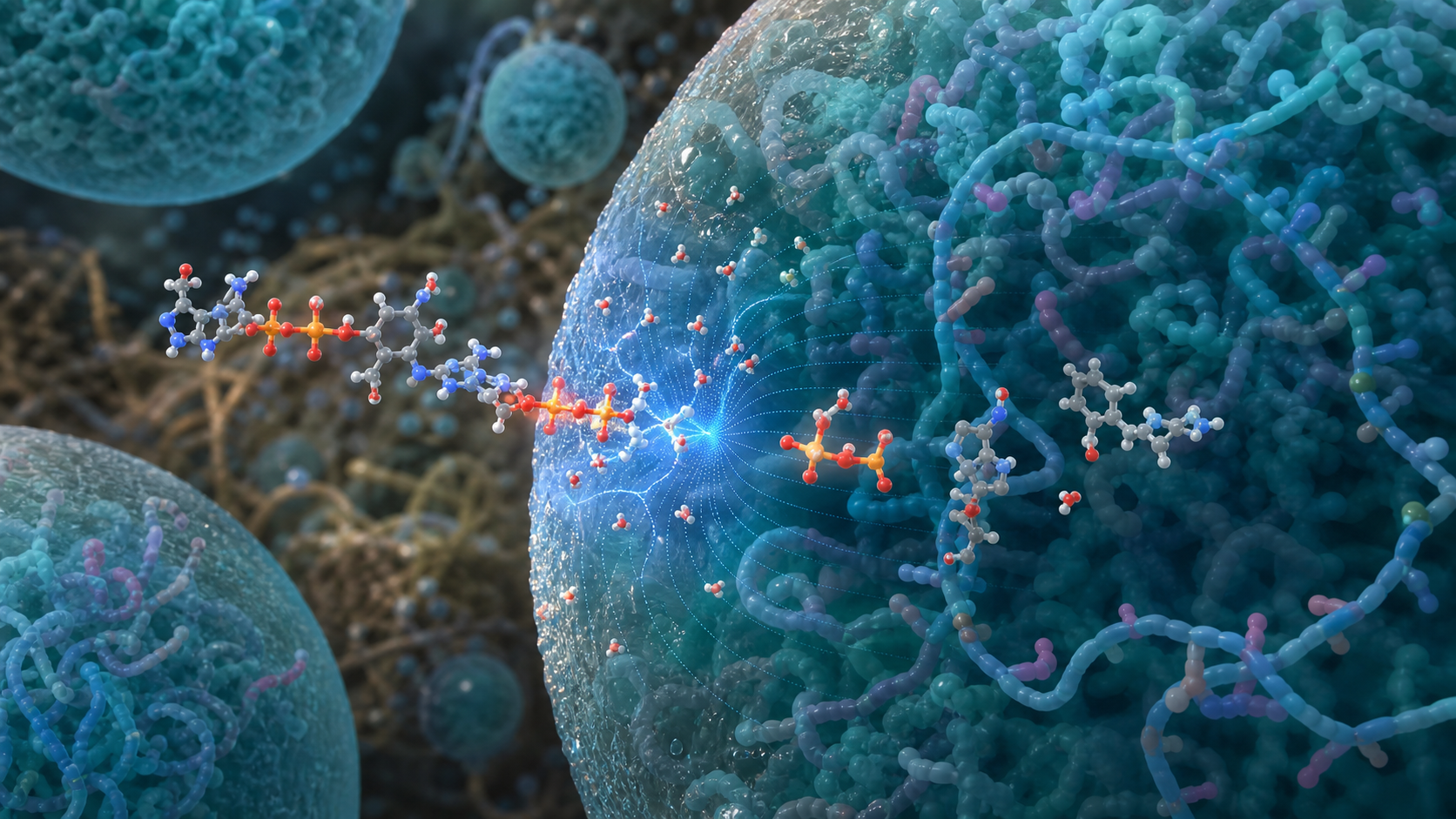
The result suggests that membraneless biomolecular condensates can do more than gather molecules: the condensed state itself can become a catalyst the authors call a condenzyme.
What produced the reaction
The team built condensates from intrinsically disordered proteins with no fixed three-dimensional structure or enzyme active site. Electric fields at the interface and changes in water properties created a reaction environment that promoted hydrolysis of esters, ATP, nucleic-acid-like substrates and peptides.
Droplet composition determined function
Not every condensate acted as the same catalyst. Changing protein sequence and charge pattern altered interfacial fields, water activity and reaction rate. The researchers showed that sequence design could tune these electrochemical properties.
Effects appeared in living bacteria
Synthetic condensates introduced into E. coli changed ATP and transcription patterns and activated gene circuits dependent on products made by condensate-catalyzed hydrolysis. This demonstrates that the chemistry can affect a living cellular system.
Human disease and treatment remain unknown
The core experiments use purified proteins and engineered bacteria. It is not yet known which reactions natural condensates such as nucleoli or stress granules control in human cells. Links to cancer or neurodegeneration are hypotheses for follow-up, not treatment results.
The precise scope of novelty
Preprint versions were public in 2024 and 2025. The new event is final peer-reviewed publication on July 24, 2026. The next test is direct causal measurement of reaction rates and functions in natural condensates.
Official Primary Sources
Washington University: Molecular Cell publication and experiment summary