WORLD NEWS
A Nature study says the ceiling on geomagnetic storms may be a statistical illusion
A new Nature paper argues that a long-used idea about saturation in Earth’s response to strong solar wind may need to be re-examined. By analysing more than one million near-Earth solar-wind measurements, the researchers say the apparent upper limit may reflect regression to the mean rather than a real physical ceiling.
What Changed
The study questions whether Earth’s upper-atmosphere current response really saturates during the strongest solar-wind conditions. Its central claim is that the apparent ceiling can be explained by regression to the mean, a statistical effect that makes noisy extreme measurements drift back toward typical values. That changes how extreme cases should be interpreted.
The Evidence Base
According to the Lancaster University-provided description, the team analysed more than one million solar-wind measurements from NASA spacecraft close to Earth. The analysis found a continuing relationship between solar-wind strength and upper-atmosphere currents, raising doubt about a hard upper limit.
Why It Matters
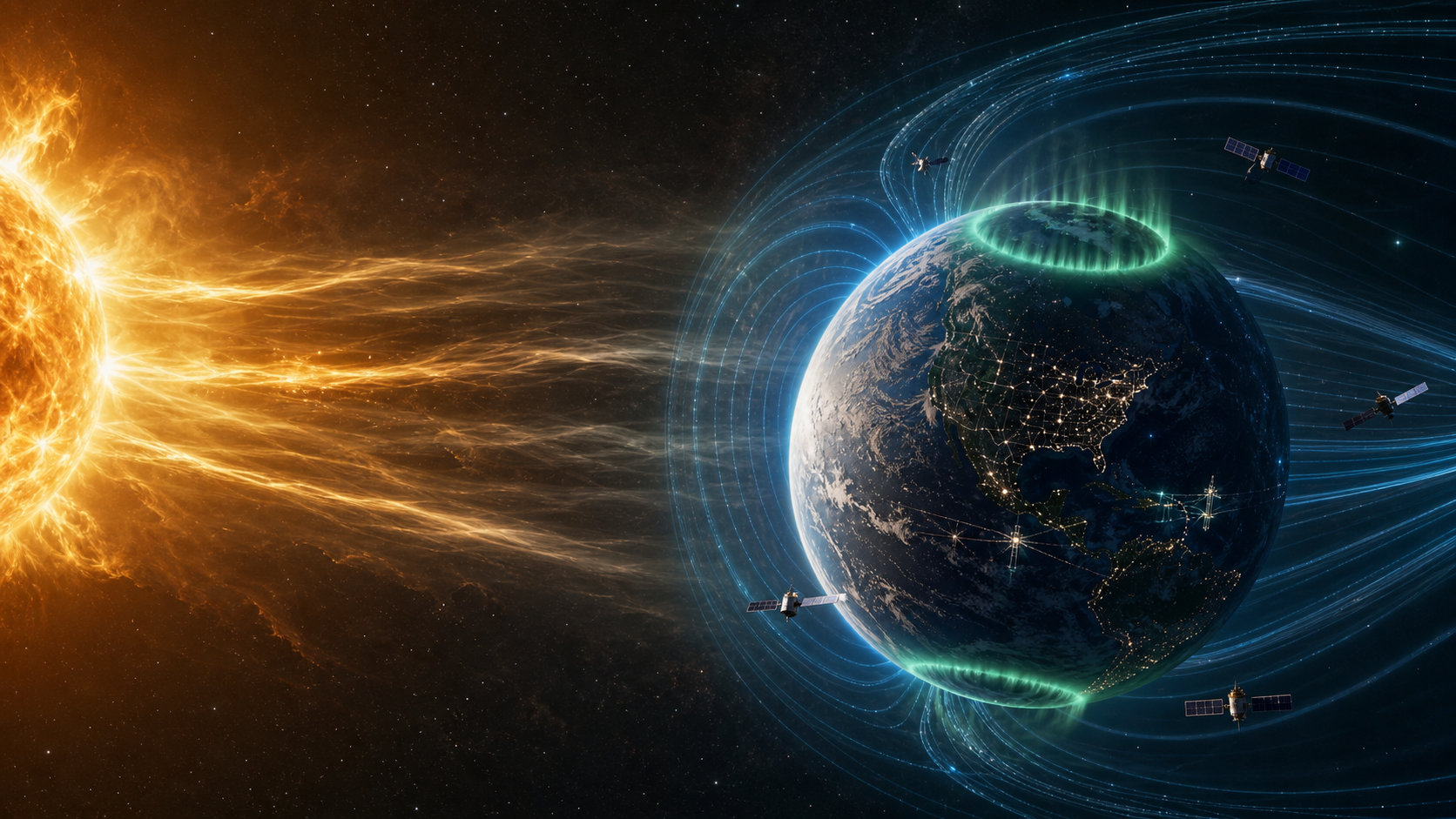
Extreme geomagnetic storms are rare, but they can disrupt satellites, power grids, navigation, and radiation exposure planning for aviation and spaceflight. If past models treated the ceiling as lower than it really is, worst-case engineering margins may need another look. The paper does not itself change operational alerts; it challenges an assumption behind risk modelling.
What Is Still Limited
The researchers note that very extreme events are rare, so the data remain thin at the far tail. It would be premature to say grid operators or satellite companies have changed their standards. The next thing to watch is whether NOAA, ESA, and national space-weather centres incorporate this result into operational models and risk assessments.
Official sources
Nature paper: research claim and journal record
Lancaster University record: researcher and institutional context
Lancaster-provided release: measurement scale and impact areas