WORLD NEWS
A planetary-mass satellite candidate has been reported, but it is not a confirmed exomoon
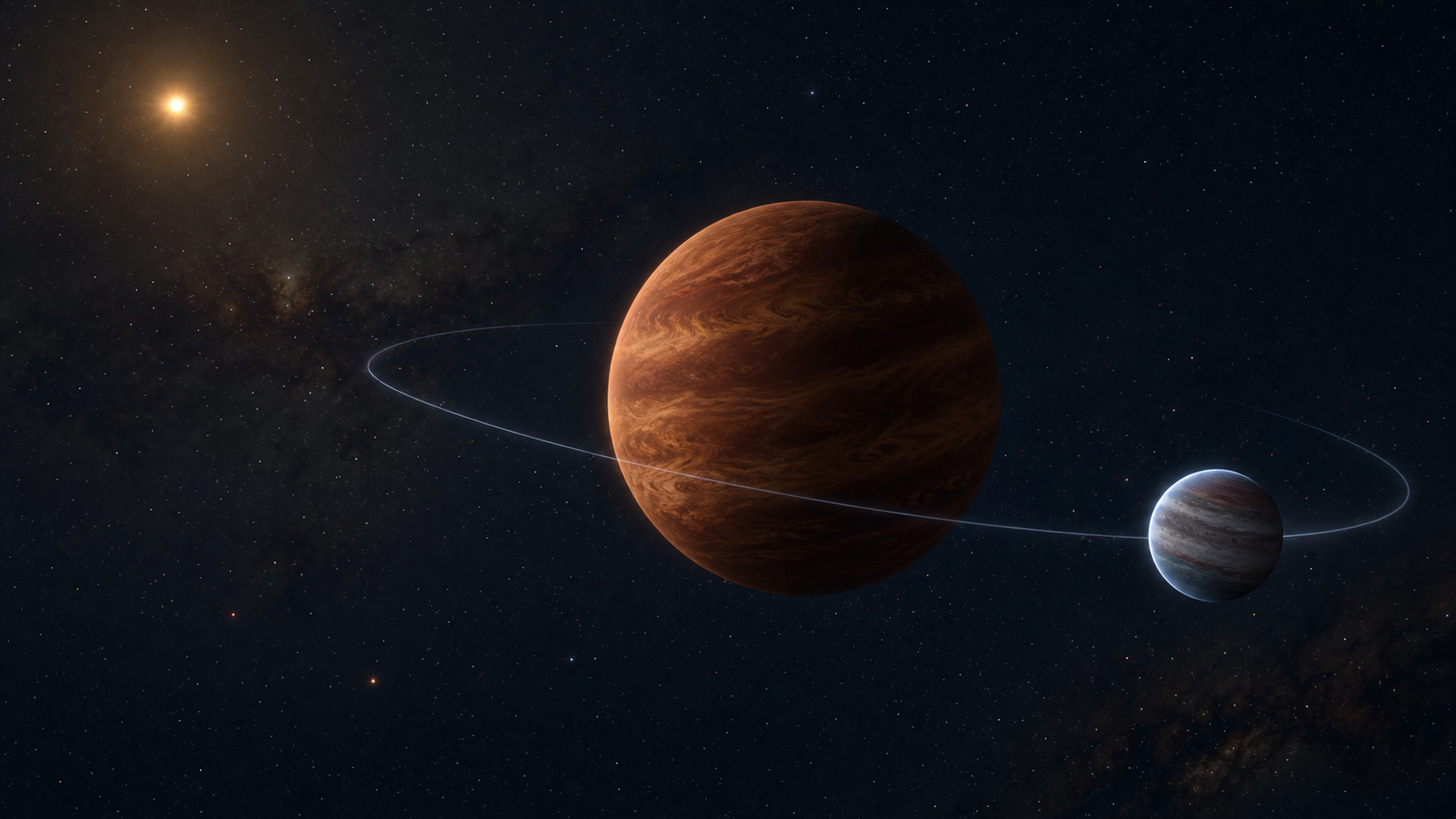
A Nature paper published on 22 July 2026 reports evidence for a planetary-mass exosatellite orbiting the brown-dwarf companion CD-35 2722 B. The best-fitting model points to about 0.9 Jupiter masses and a period of around 170 days, but confirmation and even the label “exomoon” remain unsettled.
What Was Found
The team reports a periodic velocity signal around CD-35 2722 B, a substellar companion of a star, and interprets it as evidence for a planetary-mass satellite candidate. The Nature paper notes that more than 6,000 exoplanets are known, but no exomoon has yet been confidently detected. The surprise is the scale: the candidate is not a small moon but roughly Jupiter-class in mass.
What The Evidence Is
The analysis uses radial velocities measured from VLT/CRIRES+ spectra, applying a method familiar from planet discovery to a directly imaged brown-dwarf companion. The preferred model includes a satellite with a minimum mass of about 0.9 Jupiter masses and a roughly 170-day period. The authors also point readers to reduced data and code for replication.
Why It Changes The Question
If the signal holds up, exosatellite searches could move beyond transit timing and into spectroscopy of directly imaged massive companions. A planet-sized body orbiting a brown dwarf also forces a sharper discussion about where planets, brown dwarfs, and moons begin or end.
What Remains Uncertain
The paper is explicit that it is uncertain whether the object would qualify as an exomoon under any future definition. The signal still needs more observations, independent analysis, and dynamical checks. This should be read as a strong candidate and methodological milestone, not as the final discovery of the first undisputed exomoon.
Official sources
Nature paper: publication date, mass, period, and caveats