WORLD NEWS
A healthy diet is still too expensive for 2.7 billion people
SOFI 2026 says global hunger fell for a third consecutive year in 2025, but a healthy diet remained unaffordable for 2.69 billion people. The important shift is that food access is recovering unevenly while the structural cost of nutritious diets remains high.
Verification date and core facts
SOFI 2026, released on 21 July 2026, is the joint food security and nutrition assessment produced by FAO, IFAD, UNICEF, WFP and WHO. It estimates that 7.8% of the world’s population faced hunger in 2025, equal to about 645 million people. That is below 8.1% in 2024 and 8.6% in 2022, or about 14 million fewer people than in 2024 and 43 million fewer than in 2022.
What makes this remarkable
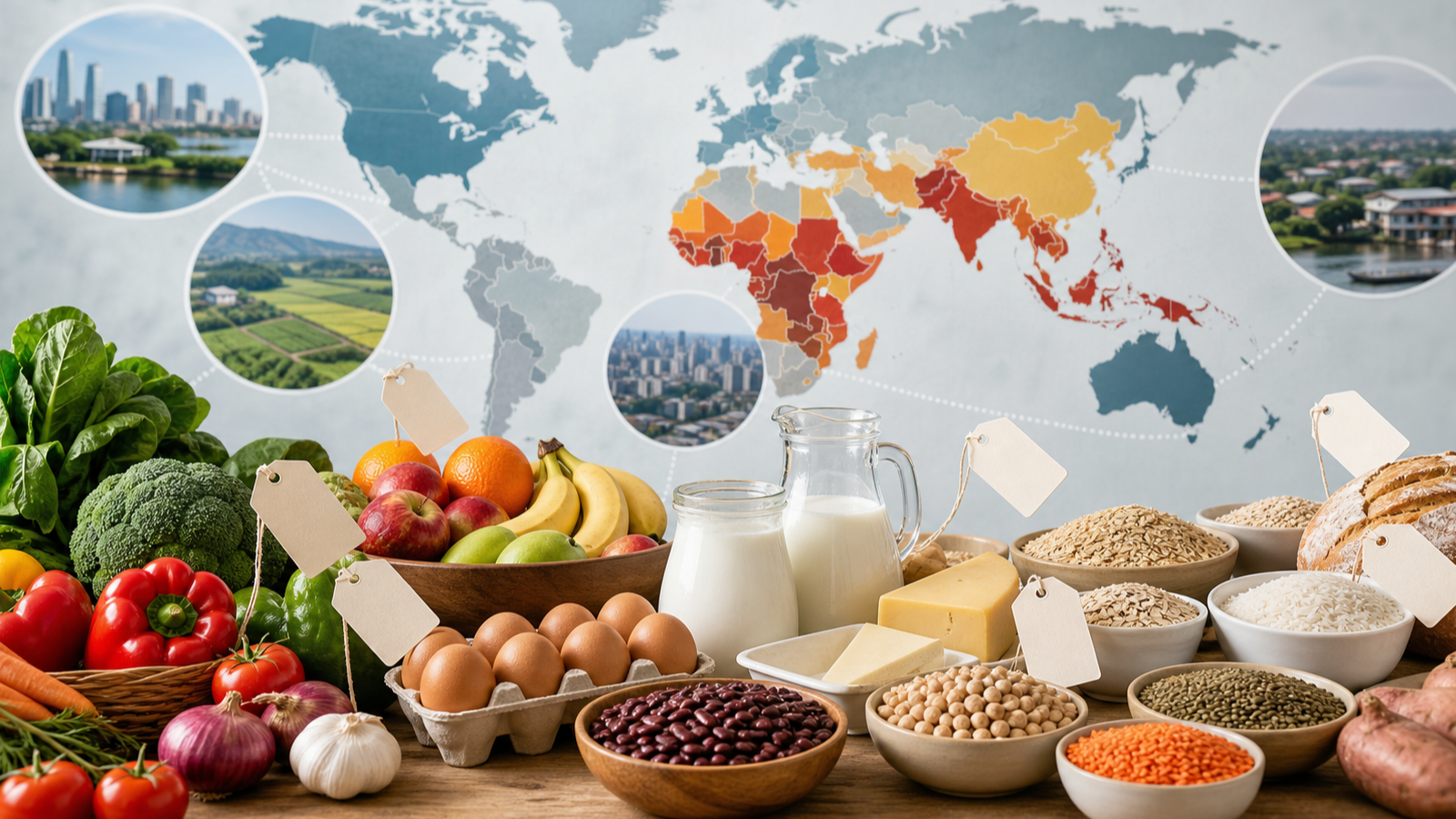
The striking point is that improvement and strain appear together. Global hunger declined, but Africa is now home to about 309 million hungry people, more than Asia’s about 292 million. Moderate or severe food insecurity still affected about 2.1 billion people, or 25.8% of the world’s population, in 2025. Africa’s rate was 56.6%, compared with 20.3% in Asia, 22.9% in Latin America and the Caribbean, and 8.7% in Northern America and Europe.
What changed
This edition broadens the question from enough calories to whether people can afford a healthy diet. The average minimum global cost reached 4.28 purchasing power parity dollars per person per day in 2025, up from 3.44 in 2021 and 2.94 in 2017. Yet the number of people unable to afford a healthy diet declined from 2.97 billion in 2021 to 2.69 billion in 2025. Income recovery, prices and food-system costs can therefore move in different directions at the same time.
Why it matters now
The timing matters because SOFI still projects 510 million to 520 million people facing hunger in 2030. That projection does not fully account for possible weather shocks such as El Niño in 2026 and 2027. Adult obesity rose from 12.1% in 2012 to 16.2% in 2024, and about 150 million children under five remain stunted. A falling hunger count is important, but it does not mean nutrition problems are solved.
What it means for readers
For readers, the issue is not only the price of groceries. SOFI says post-farmgate activities account for 70% to 75% of what consumers pay for food, and processing, logistics and wholesale can create up to 40% of total costs. That links fresh-food prices, school meals, maternal and child nutrition programmes, farm distribution policy and food-price jumps after climate disasters to the same structural problem.
Limits and next checkpoint
The 4.28 PPP-dollar figure is a global average minimum, not a household bill converted at market exchange rates. The 2025 numbers are estimates and may be revised as country data improves. The next useful checks are the regional tables in the full SOFI report, FAO and WHO cost-of-diet data updates, and evidence on how late-2026 weather shocks and conflicts affect food access.
WHO joint release with the headline SOFI 2026 figures
WHO SOFI 2026 publication page and 249-page report information