WORLD NEWS
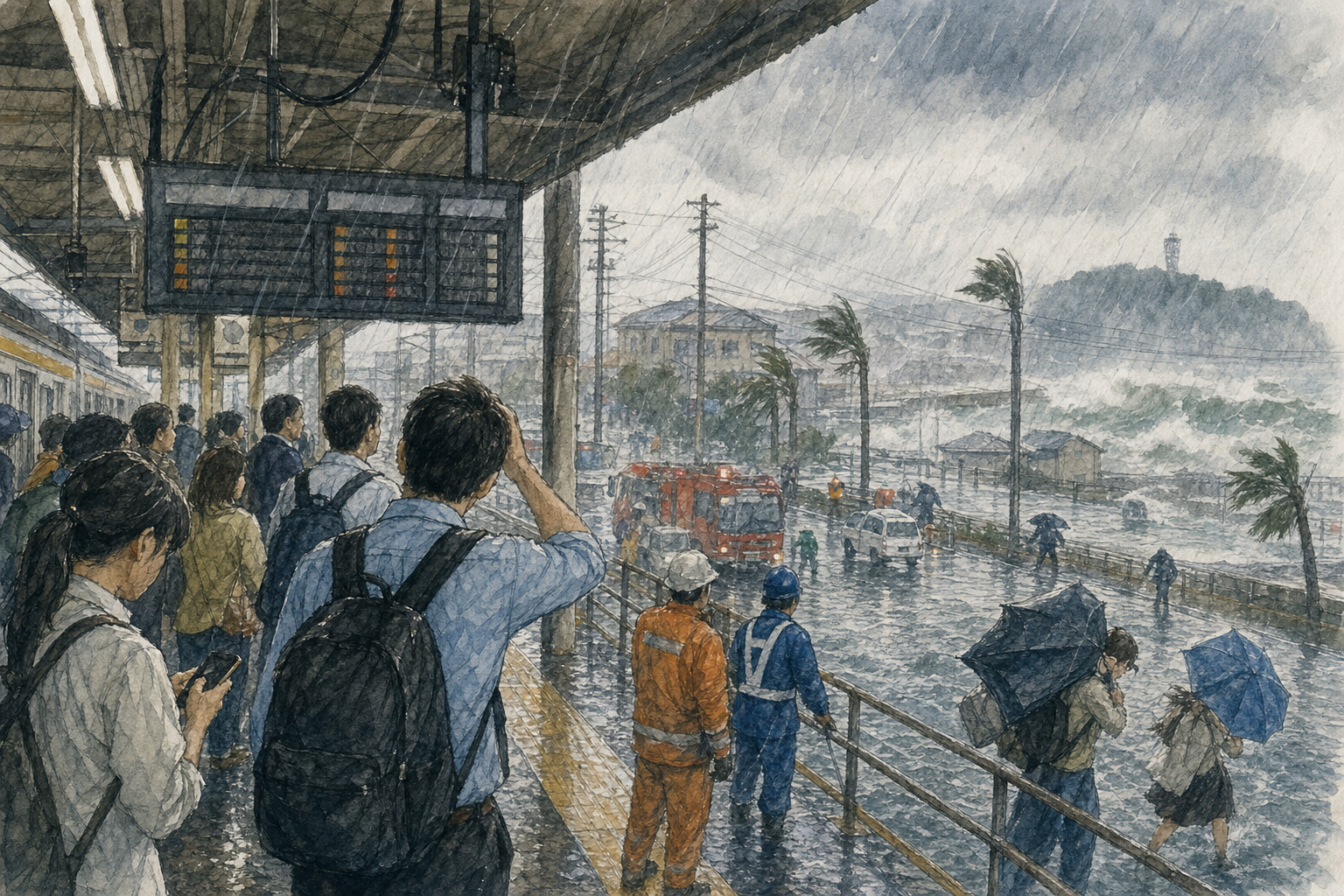
Japan is being hit by two tropical storms at once. Trains and airport plans move first
- Checked: 2026-06-27 23:25 KST
- Primary sources: AP, JMA, JR Central
Japan often deals with strong rain systems, but this is harder because it is not just one storm. On June 27, 2026, AP reported that Tropical Storm Mekkhala and Tropical Storm Higos were pounding Japan at the same time, bringing flooding, landslides, transport disruption and one death with several injuries.
The public-life angle is simple: trains and airport plans move before many travelers fully realize how serious the day has become. AP said more than 30 homes were flooded in Nara and Hiroshima, a landslide killed a man in Yamaguchi, and train operations and flights were disrupted. JMA warning pages remained active across multiple regions, and JR Central’s status pages continued updating.
For travelers, commuters and families, this is not a “carry an umbrella” day. It is a “check whether the route still exists in the same form” day.
User checks
- Do not focus only on Tokyo. Kyoto, Osaka, Nara and Hiroshima impacts matter too.
- If you are taking the shinkansen, check train status and airline updates right before departure.
- Riverside walks, coastal routes, hill-side lodgings and low-lying streets all become more risky under a two-storm setup.
- Tight itineraries break first. Reduce transfers and confirm late check-in or cancellation rules early.
Source links
- AP: two tropical storms pound Japan
- JMA: weather warnings and advisories
- JR Central: Tokaido-Sanyo Shinkansen status
Bottom line: Japan is not just having a rainy day. Two tropical systems are pushing water, wind and transport risk into the same window, and movement plans are usually the first thing to fail.