WORLD NEWS
Leonids: watch before dawn on November 18, with no guaranteed count
Japan’s National Astronomical Observatory recommends the hours before dawn on November 18 for viewing the 2026 Leonids.
Its activity peak forecast is around 9 a.m. Japan time, but viewing requires a dark sky.
Does a 9 a.m. peak mean watching at 9?
The peak is the predicted strongest activity, not the best daylight viewing time. Japan and South Korea share a time zone. Elsewhere, convert the date and check the local hours of darkness.
Why do guides give five or fifteen per hour?
NAOJ suggests about five per hour for a general observer under skies dark enough to see the Milky Way. Independent astronomy service timeanddate gives up to fifteen under ideal conditions. These estimates use different viewing assumptions; neither promises a count at your location.
Where should you look?
The streaks appear to spread from Leo, but can cross many parts of the sky. Take in a broad view instead of fixing your eyes on one point. Timeanddate recommends midnight to dawn, away from urban lights, and time for your eyes to adjust.
Good moonlight conditions are only one factor
NAOJ rates the Moon conditions favorably this year. Clouds and nearby lights can still hide meteors. Check your city’s cloud forecast and moonset before choosing when to go outside.
What remains uncertain?
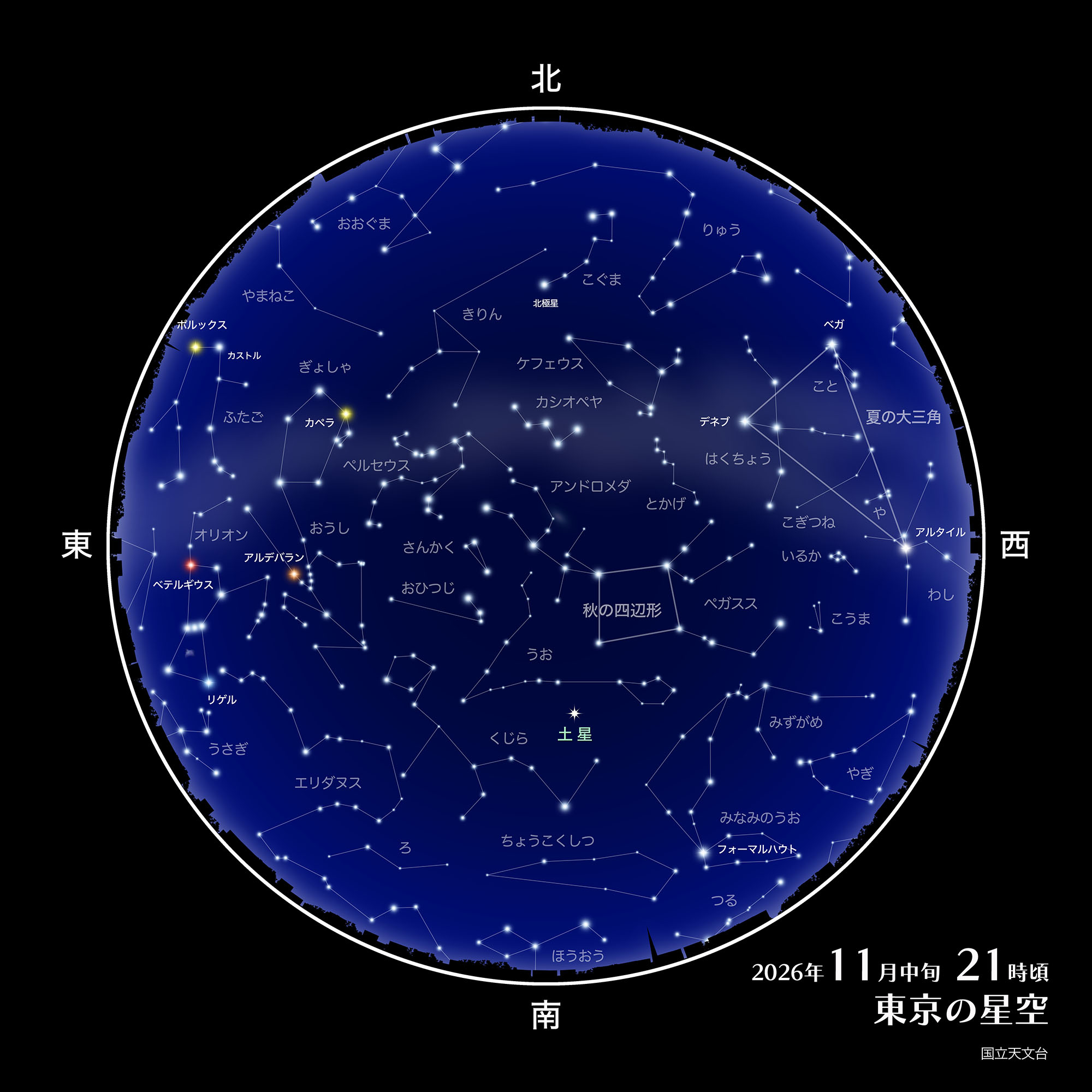
Actual counts and weather are still unknown. NAOJ’s November calendar explains its Japan-based timing and rate estimate; timeanddate’s local map helps with viewing hours elsewhere. The illustration is a Tokyo star chart for mid-November at 9 p.m., not the peak’s predawn sky or a photograph of meteors.
Primary sources and independent checks
Japan timing and observing assumptions: NAOJ
Independent viewing guide and local map: timeanddate