WORLD NEWS
Yunnan’s giant D. rex fungus earns a new place on the family tree
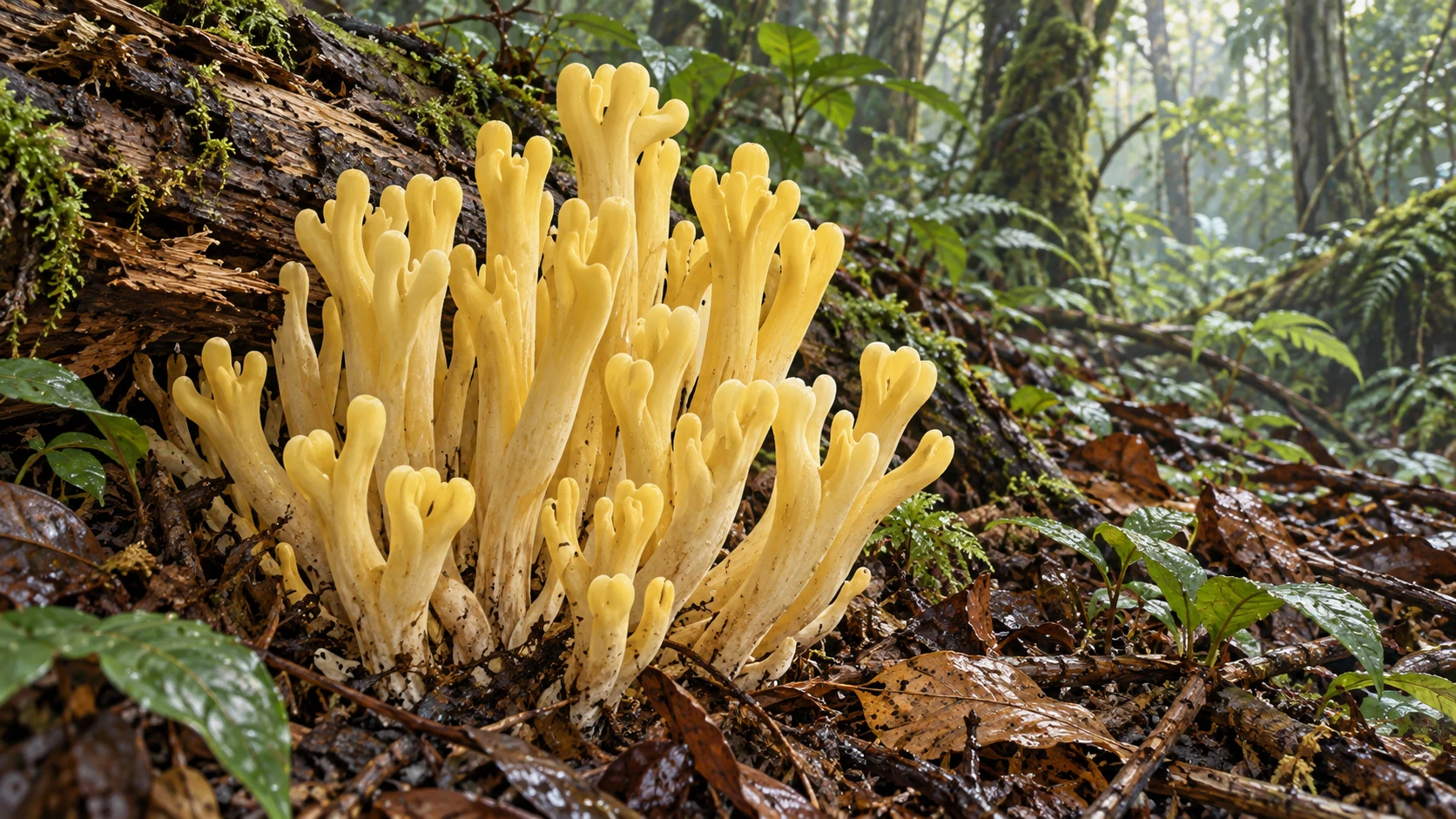
A large fungus collected in Yunnan, China, has been described as the new species Dianjunus rex through comparisons of form and DNA.
The paper’s maximum 50 cm includes the below-ground portion; it is not a record for the largest or heaviest fungus of every kind.
Which part was measured?
The species description separates 20–50 cm total length from a 10–20 cm fertile above-ground portion. It gives a general weight range of 250–600 g, while the abstract and image documentation also report a large 2.2 kg specimen. Mixing an exceptional specimen with the general range, or total length with exposed height, exaggerates the visible organism.
Was size alone enough to establish a species?
The researchers compared appearance, several DNA regions and genomes, identifying a lineage distinct from existing classifications. They proposed a new genus and the family Dianjunaceae as well as the species. Scientific description does not mean local people had never seen it. CNN directly questioned a researcher about prior local knowledge and sought comment from Stanford’s Kabir Peay, who was not involved in the study.
Why be cautious about a dinosaur-era claim?
The paper estimates the lineage’s divergence at about 65 million years ago, with a 50–80 million-year range. That is a genetic dating estimate, not the age of a living specimen. The paper also describes an earlier, different fungus weighing 3.2 kg, so this briefing makes no heaviest-fungus claim. The novelty lies in classification and unusual form together, beyond a simple weight ranking.
When was it published, and what remains open?
The journal page dates publication to September 29; October coverage renewed attention. This was not a discovery first made today. Greater height potentially helping spore dispersal is a hypothesis requiring testing. The fungus has not been established as food through completed toxin testing and is not presented as edible. Distribution, life history and the causes of its size require further specimens and experiments.
Primary sources and independent checks
Original methods, species description, discussion and conclusions distinguish total/exposed length, typical/maximum mass, lineage and publication date.: Frontiers in Fungal Biology — original research
CNN’s researcher email and comment from uninvolved expert Kabir Peay; KESQ is its host, not a second check. Journal date takes precedence.: CNN / KESQ — interviews
Read in other languages
한국어 · English · Español · 日本語 · Tiếng Việt