WORLD NEWS
Brain development may begin with two distinct cell lineages
Scientists studying mouse embryos and human stem cells distinguished two cell lineages leading to different regions of the brain.
The findings do not establish two independently functioning adult brains or prove exactly how two ancient nervous systems merged.
Questioning a single developmental starting point
The Nature Neuroscience study appeared on 18 September and received fresh independent reporting on 17 October. Tracing cell descendants in embryos showed an anterior lineage contributing to forebrain and midbrain, and a posterior lineage to hindbrain. The claim concerns early developmental commitments, rather than physically dividing an adult brain into two organs.
Gene activity and DNA packaging supply evidence
The populations differed in activity associated with Otx2 and Gbx2 and in chromatin, the packaging that helps control which genes cells can use. Human stem cells guided towards either route also showed distinct lineage identities. Embryonic tracing and laboratory differentiation complement one another, but neither amounts to directly observing all development in a living person.
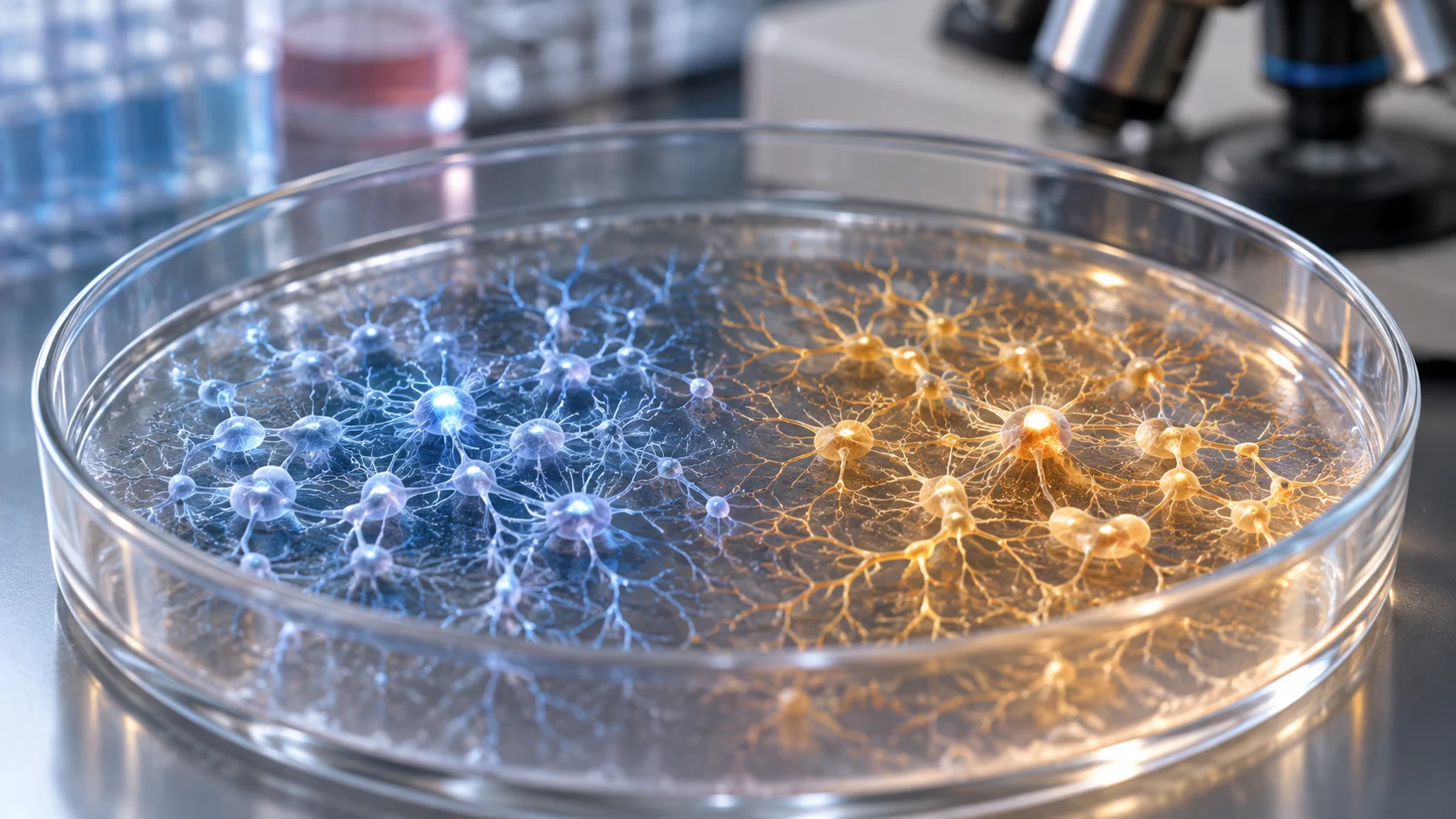
Growing difficult-to-produce neurons
The team used the distinction to generate particular hindbrain motor neurons from human stem cells. This offers cells for investigating regions involved in facial muscles and swallowing, which cannot simply be sampled alive from patients. A laboratory cell model could aid disease research; obtaining those cells is a different achievement from demonstrating a treatment in patients.
Where the evolutionary explanation remains tentative
Previously published data from other animals showed related distinctions, suggesting ancient developmental routes. Their exact origin and integration remain unresolved. In a direct Live Science interview, a study author explicitly described the evolutionary explanation as an idea that could change. Independent replication and disease-model testing remain next steps. Stanford has disclosed related patent applications, which should be read alongside the claims.
Primary sources and independent checks
Original paper: mouse tracing, human-cell differentiation and patents; abstract and extended data checked, full subscription body restricted: Nature Neuroscience
Institutional account: cell production and brainstem disease research; strong headline narrowed by paper and author caveats: Stanford Medicine
Independent email reporting: authors and uninvolved biologist; evolutionary limits, not replication: Live Science
Read in other languages
한국어 · English · Español · 日本語 · Tiếng Việt