WORLD NEWS
Winnie-the-Pooh’s first book turns 100: a return to its words and drawings
A. A. Milne’s first Winnie-the-Pooh storybook reached its publication centenary on October 14, 2026.
The reference point is the first book in 1926, not a shared debut date for every character, sequel or screen adaptation.
What exactly is a hundred years old?
The University of Surrey’s archives team identifies October 14, 1926 as the first publication date, and RTÉ connects the anniversary to that original book. A. A. Milne wrote it and E. H. Shepard provided its illustrations. Thinking only of familiar screen characters can obscure the original combination of prose and line drawings. The number 100 measures the time since this first book, not the age of everything carrying Pooh’s name.
What does a facsimile reproduce?
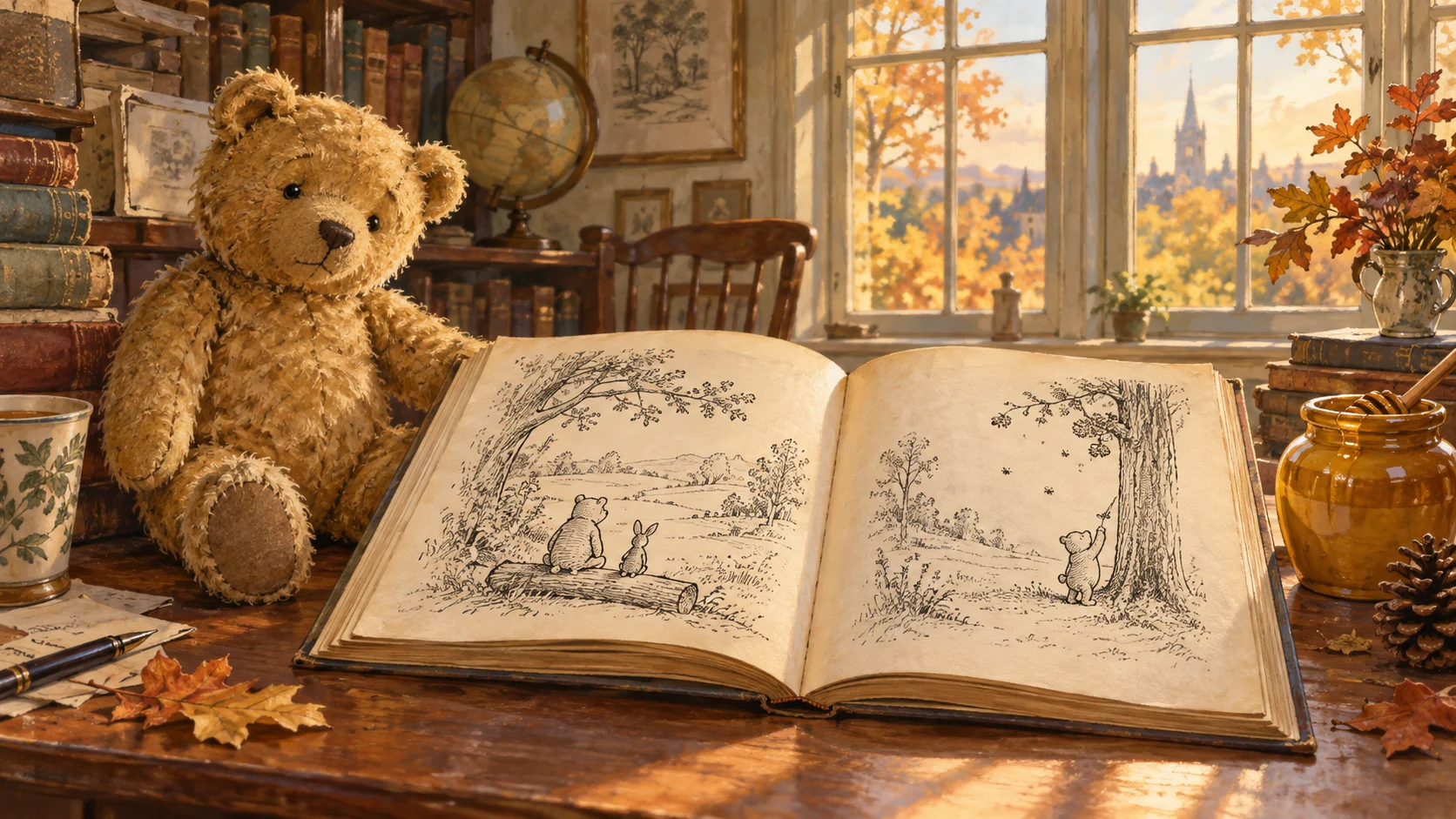
HarperCollins describes a centenary facsimile retaining the printer marks and irregularities of the original edition, with Shepard’s black line illustrations. This is a way of presenting an old edition’s printed appearance, rather than an announcement of newly invented scenes. It lets readers distinguish the first book from later adaptations. The publisher’s product description is primary evidence about that edition’s production, however, not a guarantee of stock or sales conditions in every country.
Where can the drawings’ history be checked?
Surrey says it holds three collections related to Shepard: personal archive material donated in 1974, material from descendants through The Shepard Trust, and hand-coloured illustrations on long-term loan from HarperCollins. The university planned archive visits and Pooh Sticks activities for the anniversary, with its community identified as the audience. An event announcement cannot establish actual attendance or unrestricted entry for all visitors.
What should readers compare?
Start by matching the title, author, illustrator and edition. The editorial point is that facsimiles, translations, later stories and screen versions can reflect different choices. A single product page cannot explain the whole body of work, and a familiar screen image should not be assumed to be an original illustration. Archive collection descriptions and publishers’ edition details provide a more precise way to understand the centenary than treating it simply as a birthday celebration.
Primary sources and independent checks
Publisher primary source: 1926 edition, facsimile scope, writer and illustrator; no sales promotion: Farshore / HarperCollins: Centenary Facsimile Edition
Archive institution: first-publication date, three collections and campus audience; not attendance results: University of Surrey: Archives and Special Collections
Independent broadcast article: October 14 and original 1926 book; not every edition’s debut: RTÉ news2day: 12 October 2026
Read in other languages
한국어 · English · Español · 日本語 · Tiếng Việt