WORLD NEWS
Hairy legs and red eyes: two new Salish Sea sea spiders reveal a gap in our knowledge
A UBC study describing two new sea spider species in the Salish Sea drew renewed attention in independent reporting on October 2.
The paper was published on August 26; this does not mean newly evolved animals or giant spiders threatening people have just appeared.
Newly described does not mean newly created
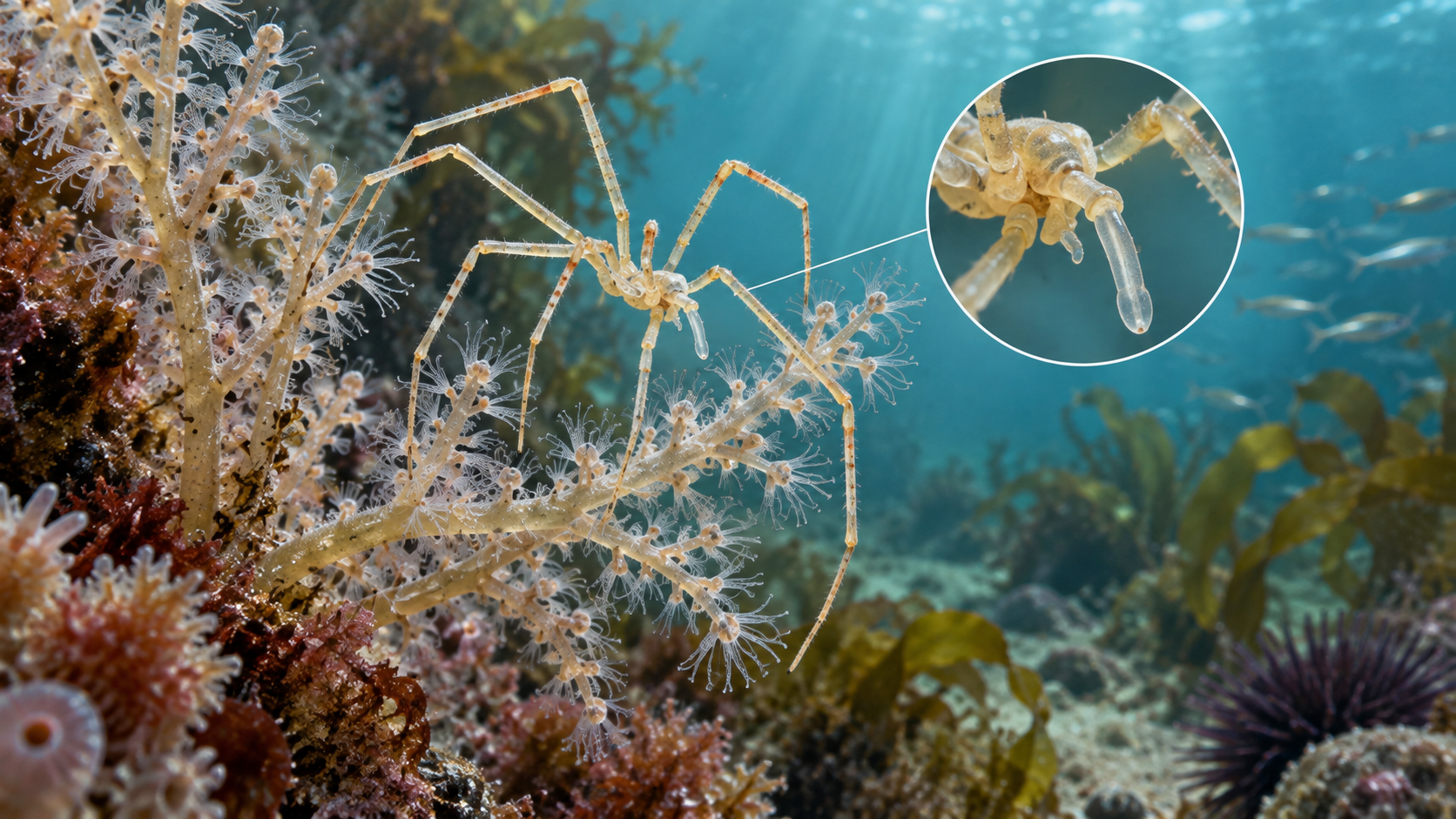
Sea spiders are marine arthropods named for their resemblance to land spiders. The study compared anatomy and genetic information to distinguish species already living in coastal ecosystems. The paper’s public abstract covers seven species: five previously known species are redescribed, while Callipallene pilosuspedes and Tanystylum kiixin are described as new. This is a change in scientific identification, rather than evidence of a recent arrival.
A diving survey revealed different bodies
UBC says specimens were collected from September 2023 to August 2024 at depths of up to 18 metres, in areas including Quadra Island, Vancouver, Bamfield and Victoria. C. pilosuspedes has long, curved leg spines and red eyes. The researchers reported collecting only one specimen of that species. A single collected specimen cannot tell us how rare the species is across the whole region.
Other organisms live on these small animals
UBC reported frequently finding dirt, debris and tiny parasites on T. kiixin specimens. Its less dexterous egg-carrying appendages also affect grooming ability. The observations illustrate why a small animal can be studied together with organisms around it and on its body. Understanding such relationships first requires a reliable way to tell the species apart.
Identification comes before measuring environmental change
The paper combines anatomical imaging and molecular analysis and provides an identification key for regional species. That gives later surveys a basis for comparing the same animals over time. It does not establish population decline or climate damage in the new species. Our check reached the public abstract and UBC announcement; the full paper required subscription access. Additional sampling across sites and seasons, followed by repeated observations of identified species, is the next route to understanding change.
Primary source and independent checks
Primary source or announcement: UBC
Institutional or data check: Organisms Diversity & Evolution
Additional primary source or independent check: Smithsonian Magazine
Read in other languages
한국어 · English · Español · 日本語 · Tiếng Việt