WORLD NEWS
Mangroves establish during calm-wave windows; a 400-coast model reached 78.2% accuracy
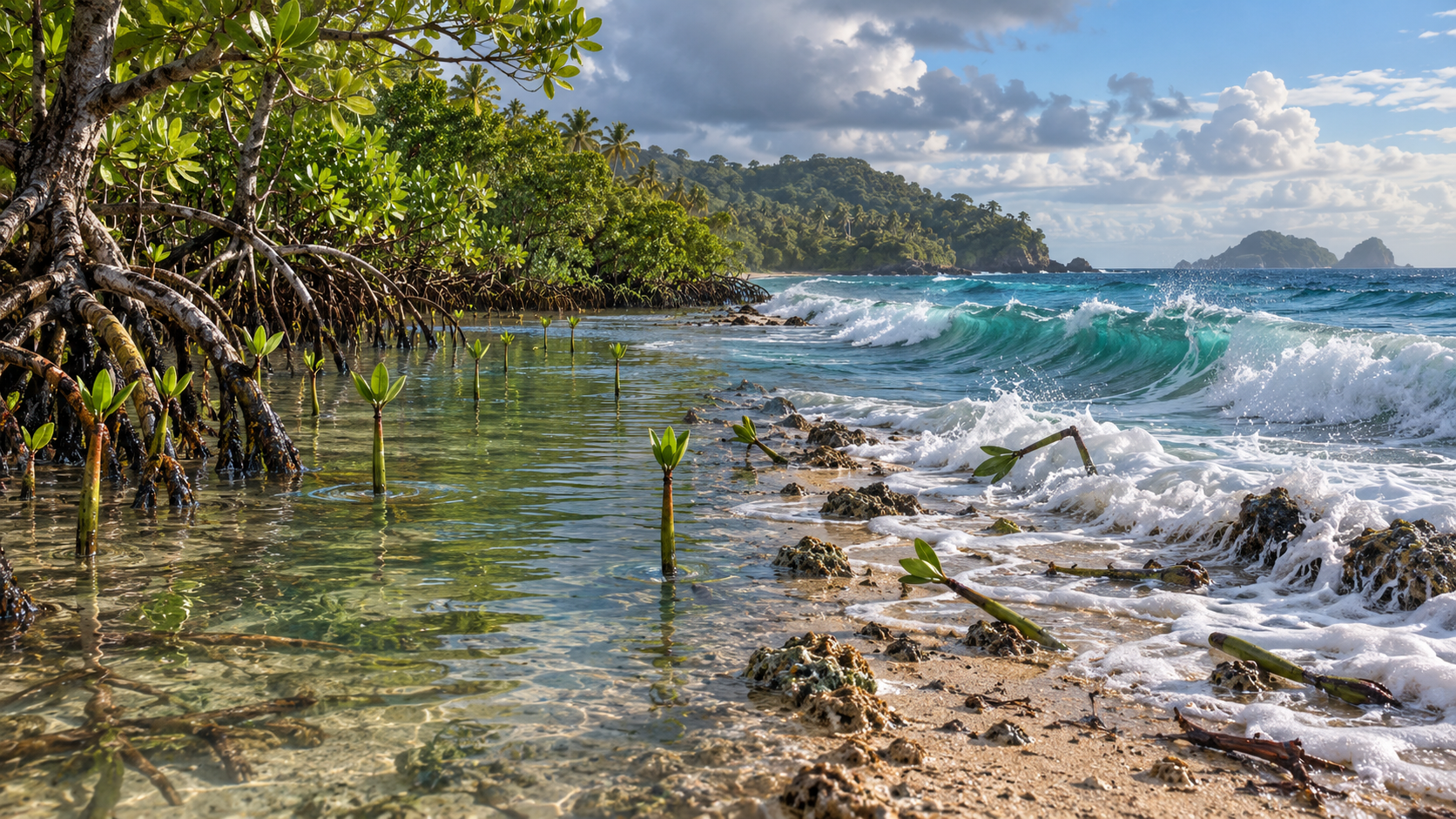
On exposed coasts, mangrove presence was strongly linked to uninterrupted low-wave periods that young seedlings could survive.
A process model using offshore waves and shoreline direction classified 394 valid sites with 78.2% accuracy. That number is not a guarantee of restoration success.
How 400 sites were chosen
Researchers selected 200 mangrove and 200 non-mangrove sites across five inhabited regions, cross-checking Global Mangrove Watch with 2025 satellite imagery. They combined 20 years of three-hour wave data with each shoreline’s orientation.
Why a calm window matters
Floating propagules can be washed away soon after reaching shore. Wave forcing must remain below age-dependent thresholds for days to months while roots anchor and seedlings become more resistant. The model calculated these uninterrupted windows of opportunity.
What 78.2% leaves out
The final test used 197 mangrove and 197 non-mangrove sites with valid hydrodynamic data. Salinity, tides, river sediment, temperature, species and development also shape real distributions. Strongly sheltered coasts should not be read the same way.
What restoration can use
Plans can consider not only where to plant but when wave direction and season offer an establishment window. Climate-driven shifts of 5–10 degrees in wave direction or changes in storms could move suitable areas. Local species and wave measurements remain essential.
Primary source and independent checks
Primary paper: Nature 원 논문
Institutional or data check: Global Mangrove Watch 분포 자료
Independent or context check: Project Halo 파랑·맹그로브 현장 연구
Read in other languages
한국어 · English · Español · 日本語 · Tiếng Việt