WORLD NEWS
A light-recharged electrostatic filter retained performance for three months
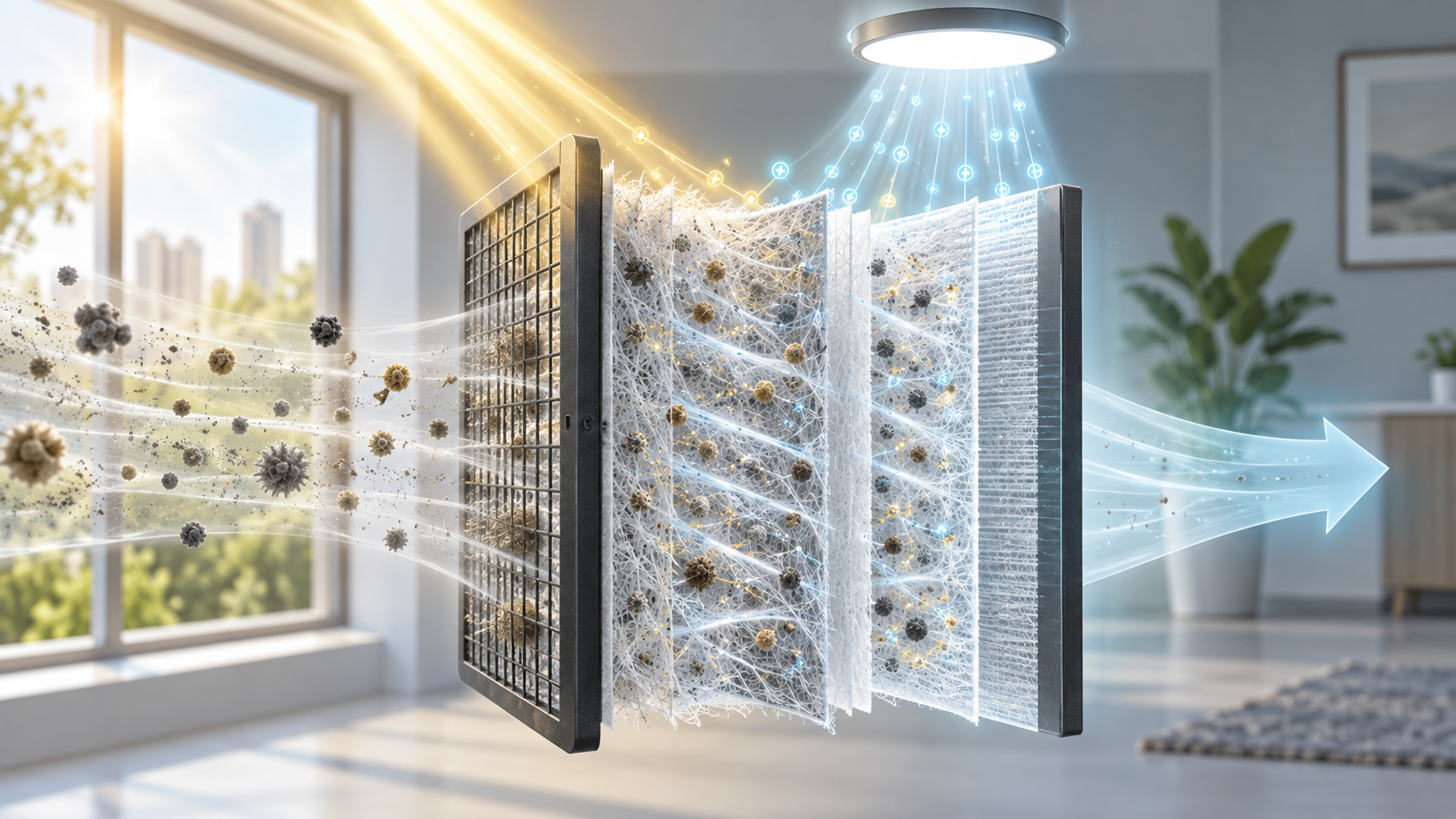
The team reports that overcast daylight and indoor LEDs supplied enough energy to recharge the filter. Tests indicated N95- and N99-level particle efficiency and reuse over hundreds of cycles.
Electrostatic filters can lose charge with moisture, contamination and time. The design uses light to restore its field and slow that decline.
What is different
Instead of relying only on a high-voltage corona system, the material itself gains charge from light and attracts particles. Low-energy indoor lighting is the notable feature.
What 99% and 95% mean
They are fractions of the filter’s own maximum efficiency retained over time, not a universal statement that 99% of every particle size was removed. Flow, humidity and pollutant type can change results.
Is it ready as a mask
Researchers built prototypes, but mass production and self-cleaning need work. Breathing resistance, face seal, safety and national certification remain separate tests.
What must be tested next
Long exposure to dust, oils and humidity, repeated cleaning and any electrical by-products need evaluation, followed by real-room and worn-mask comparisons.
Primary source and independent checks
Primary source: Chem paper
Institutional explanation: Cell Press research release
Independent check: Chem article record
Read in other languages
한국어 · English · Español · 日本語 · Tiếng Việt