WORLD NEWS
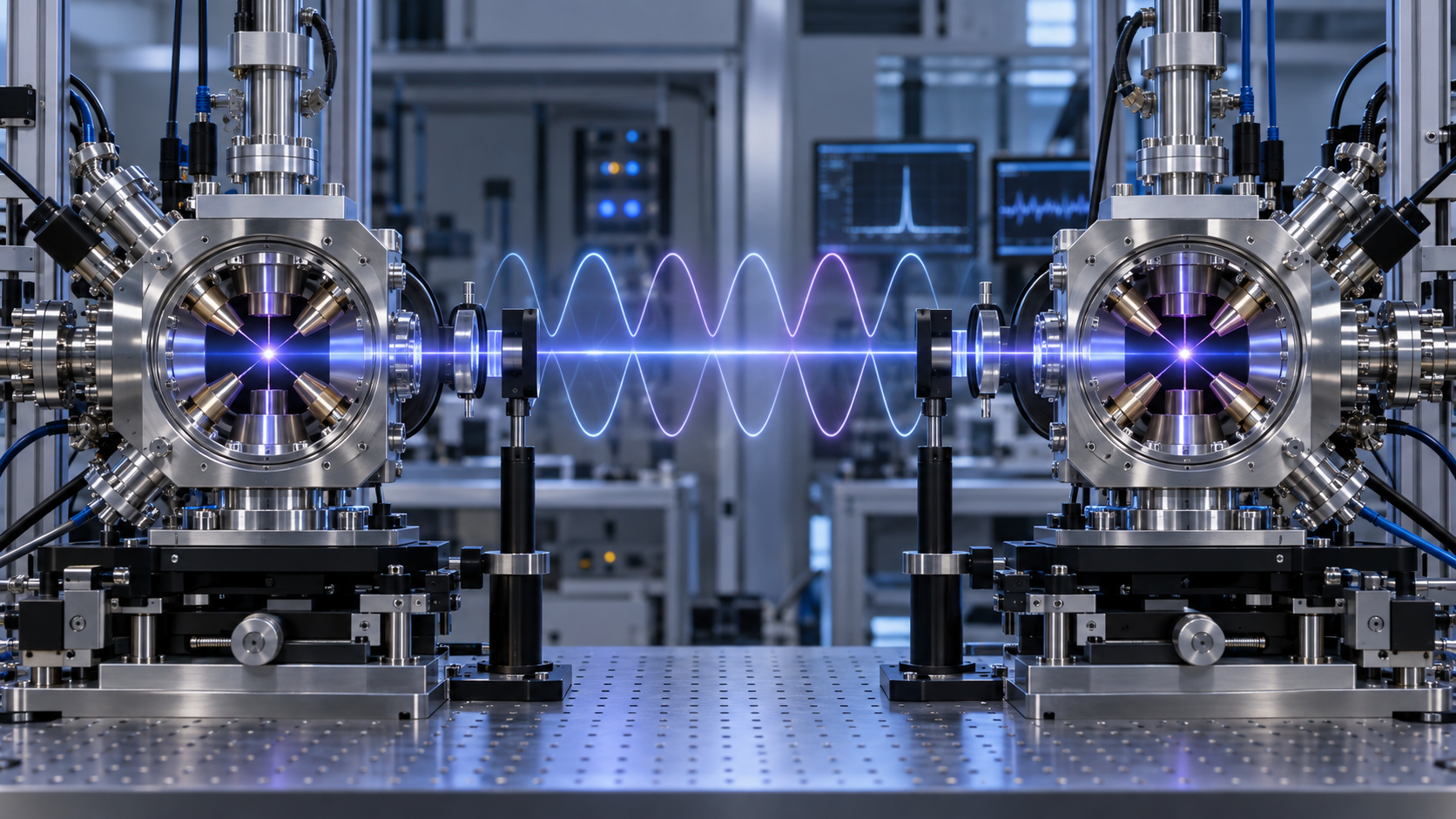
Two lutetium clocks agreed at the 19th decimal place
Each clock had evaluated uncertainty near 1×10⁻¹⁹, four times lower than the previous record.
The systems were compared after 200 hours of averaging, testing whether their systematic error budgets held in practice.
Why lutetium
Its optical transition is unusually insensitive to temperature and magnetic fields. Room-temperature operation and commercial lasers may aid portability.
Accuracy versus stability
Accuracy limits systematic offset; stability describes short-term fluctuation. The advance is verifying calculated accuracy by comparing two clocks.
Uses
Better clocks can support geodesy, navigation and tests for changing constants or dark matter. This is not a consumer timekeeping product.
Next
Other laboratories and long-distance networks must reproduce it. Redefining the SI second remains a separate international process.
Primary source and independent checks
Primary source: Nature paper
Institutional explanation: NUS/CQT release
Independent check: Nature independent news
Read in other languages
한국어 · English · Español · 日本語 · Tiếng Việt