WORLD NEWS
Sixteen Asian elephants could stop an impulsive reach for visible food
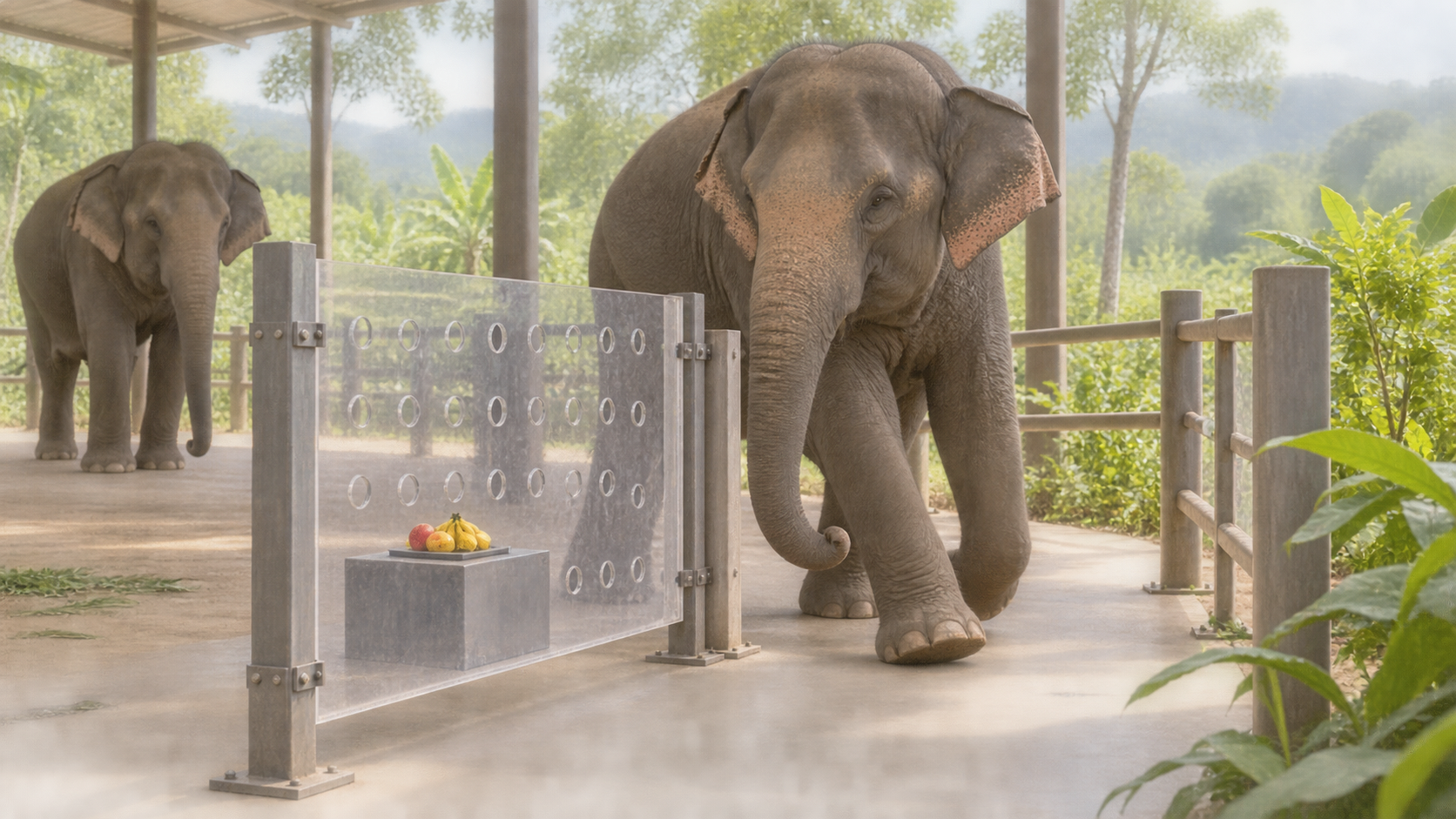
Sixteen Asian elephants detoured around a transparent barrier and switched away from a previously successful method when rules changed.
Success varied and the sample was small; the study does not show elephants always act rationally in the wild.
Tasks
One task required a side route around visible food; another required abandoning an old solution.
Result
Most animals suppressed an immediate reach or repeated strategy, evidence of inhibitory control.
Variation
Performance differed by individual and task, suggesting control is context-dependent rather than one score.
Limits
All animals lived at one institute and were familiar with people and apparatus. Cross-species rankings need matched tests.
Next
Multi-site and more naturalistic sensory tasks could test generality and inform individualized welfare training.
Primary source and independent checks
Read in other languages
한국어 · English · Español · 日本語 · Tiếng Việt