WORLD NEWS
The “American cheetah” was a puma relative — Yukon animals also ate fish
Nuclear genomes recovered from four fossils of the extinct “American cheetah,” Miracinonyx trumani, place it beside living pumas rather than African cheetahs. The lineages split about 2.6 million years ago, and Yukon fossils extend its known range more than 20 degrees of latitude northward.
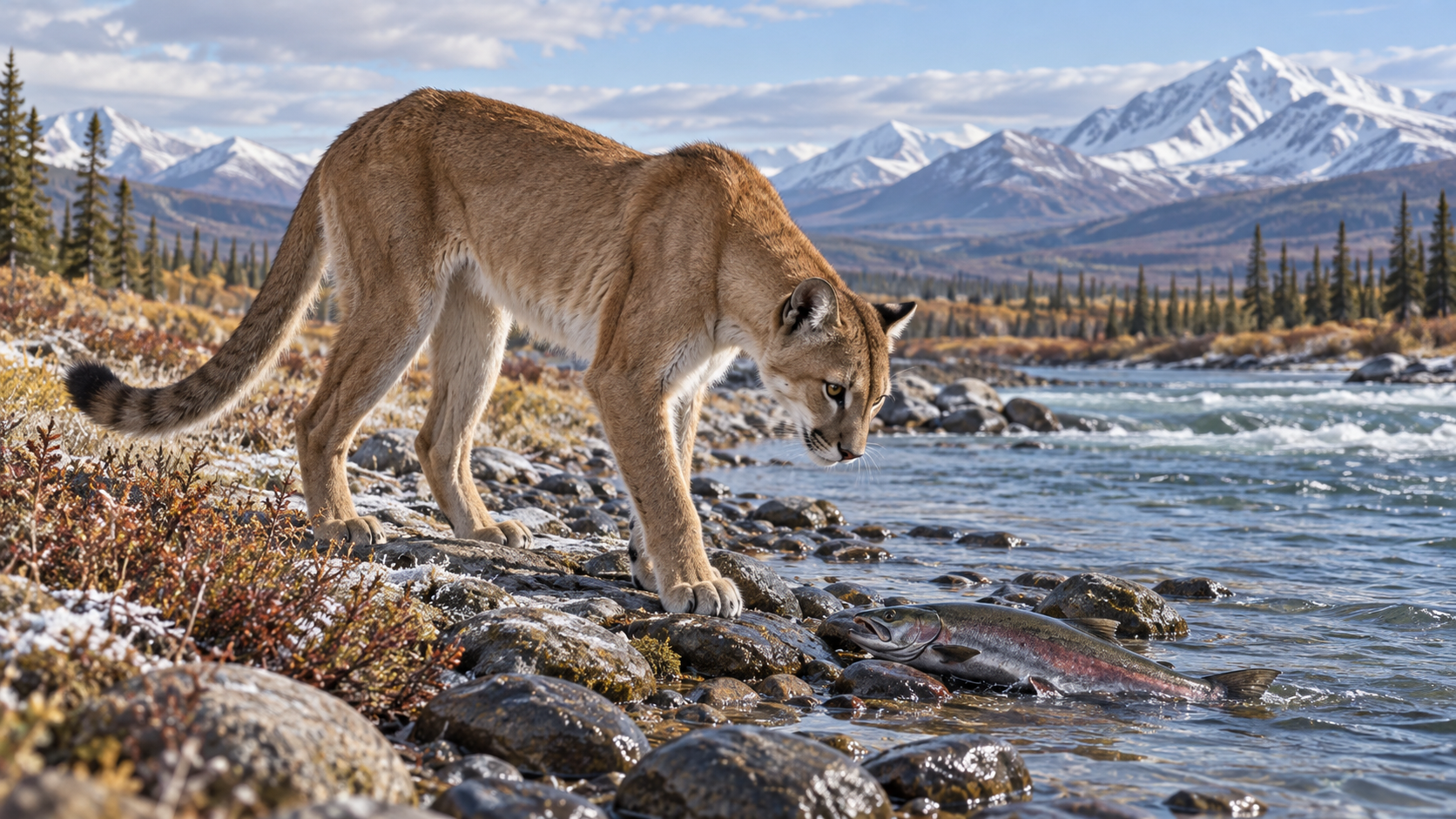
Stable isotopes suggest the roughly 31,000-year-old Yukon animals used anadromous fish such as salmon, while a roughly 23,000-year-old Wyoming animal was a terrestrial generalist. Four regional specimens do not show that the entire species always ate fish.
Why was it called a cheetah?
Its slim body and long legs resemble a modern cheetah. Genomes show that similarity arose by convergent evolution, not close ancestry.
Which fossils were tested?
One Wyoming and three Yukon specimens yielded the most complete nuclear paleogenomes yet; isotopes in bone provided dietary context.
How was fish inferred?
Yukon isotope values fit a high trophic position and anadromous-fish use. There were no preserved stomach contents, so “fish specialist” would be too strong.
What else changes?
The northern fossils show survival in a far harsher Arctic setting than previously recognized, challenging a simple high-speed pursuit story.
What remains?
More DNA and isotopes are needed to separate regional movement, diet and extinction histories from a four-specimen sample.
Primary source and independent checks
Current Biology 연구·Cell Press 설명
Read in other languages
한국어 · English · Español · 日本語 · Tiếng Việt