WORLD NEWS
Underpants, splash-free urinals and eight more 2026 Ig Nobel winners
Research that buried 1,000 pairs of underpants in more than 25 countries, designed a less splashy urinal and used mosquito proboscises as 3D-printing nozzles was among ten winners of the 2026 Ig Nobel Prizes. The 36th ceremony took place in Zurich, Switzerland, on September 3.
These are not Nobel Prize categories or a popularity vote for amusing headlines. Annals of Improbable Research independently honours real studies that first make people laugh and then think, and the original publication may be decades older than the award.
What won?
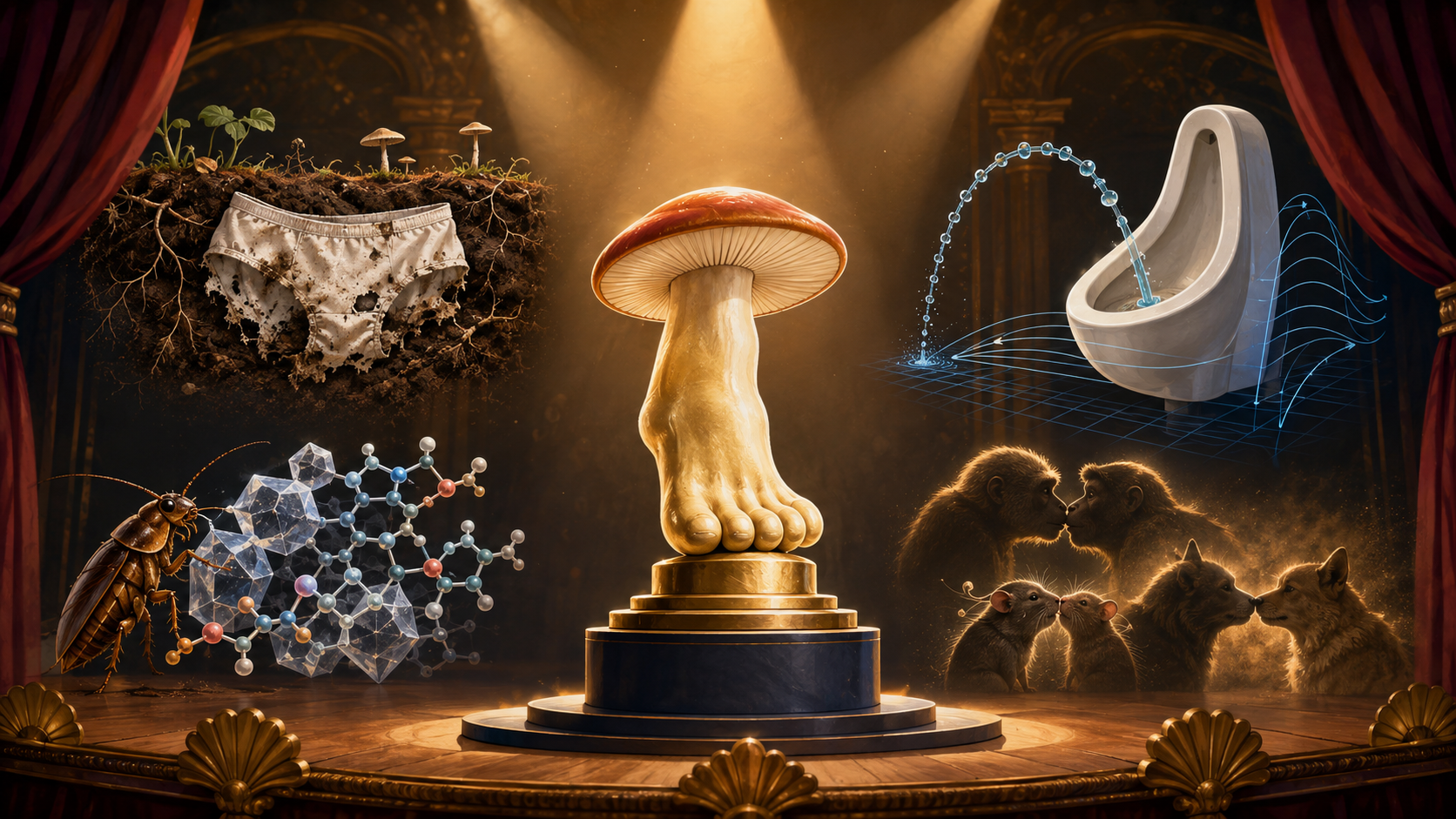
Biomechanics honoured a cross-species definition of kissing; chemistry, energy-rich protein crystals that nourish embryos of a live-bearing cockroach; medicine, the aerodynamics of nose-blowing; biology, controlled tests of venomous-snake defensive behaviour; and physics, geometry intended to reduce urinal splash.
What were the other five?
Technology recognised mosquito proboscises used as high-resolution printing nozzles. Olfaction covered parents’ ratings of babies’ and teenagers’ odours; peace, preferences for friends who are vicious to disliked people; economics, social class and unethical behaviour; and soil science, cotton-underwear decomposition.
Why bury underpants?
Identical cotton garments spent two months in fields and gardens. Greater disappearance makes soil-organism activity visible, which is useful for public participation and comparison. It is an explanatory indicator, not a replacement for a complete laboratory soil assessment.
Should anyone copy the dangerous-looking work?
No. The snake research used trained researchers, protection and controlled conditions; it is not advice to step on venomous snakes. Mosquito nozzles were prepared laboratory material, and cockroach protein crystals are not commercial milk for people to drink.
Why are old papers winning now?
The awards are not limited to work published in 2026. The medicine paper dates to 1977, economics to 2012 and the cockroach-crystal paper to 2016. Readers should separate the date of recognition from the date and limits of each result, then follow the official list to the original papers.