WORLD NEWS
A bacterial enzyme read an eight-letter genetic alphabet
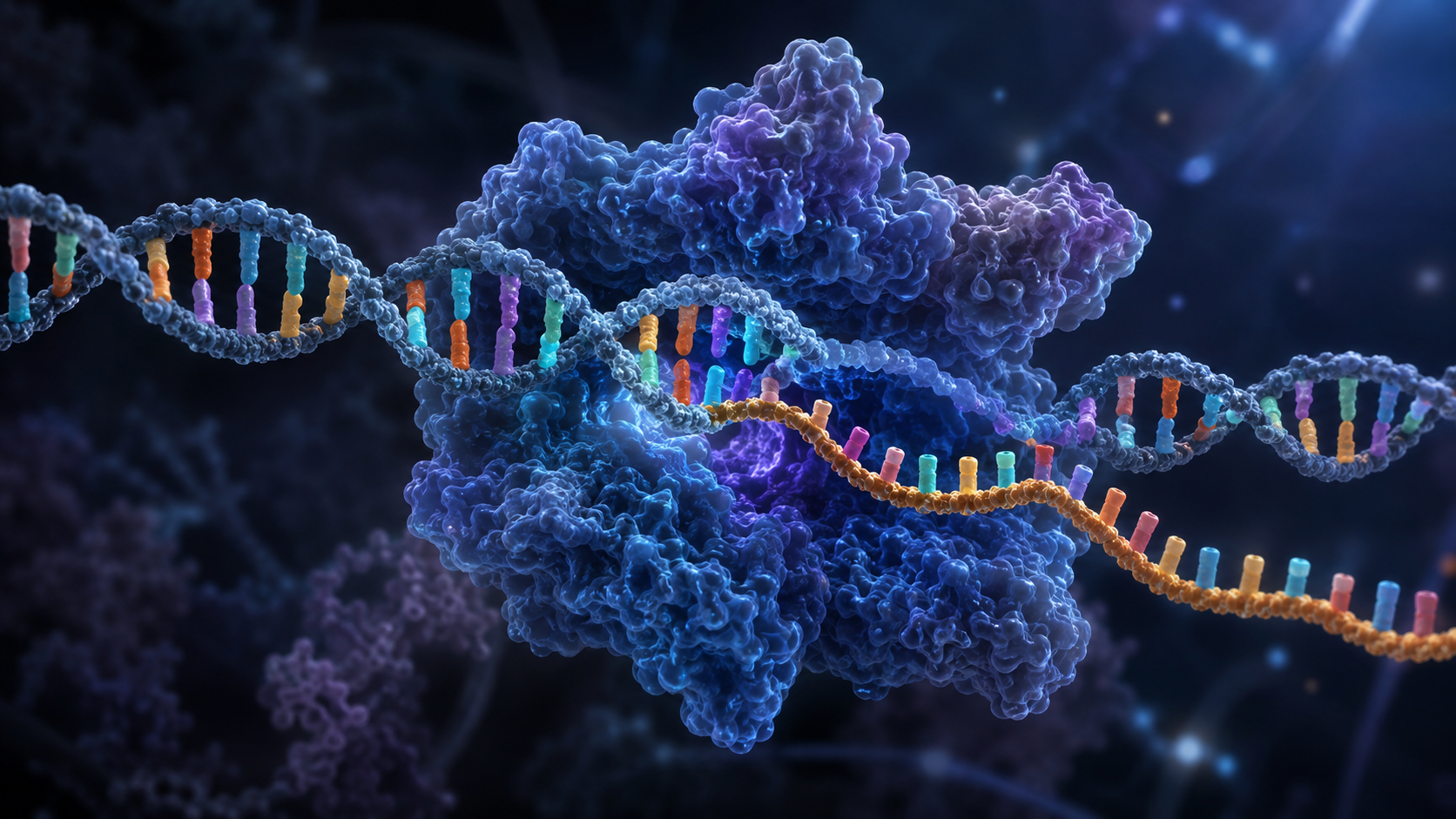
E. coli RNA polymerase can read and transcribe an eight-letter genetic alphabet made from DNA’s four natural bases plus four synthetic ones. A September 2 Nature Communications paper shows how two unnatural pairs, P:Z and B:S, fit the enzyme in native-like geometries.
The study did not create a new organism or prove a therapy in human cells. It used purified bacterial enzyme and short nucleic acids in vitro; stable replication, transcription and translation inside cells remain separate challenges.
What are the eight letters?
The system adds synthetic P, Z, B and S to A, T, C and G. More letters greatly expand possible sequences and chemical functions, but the added bases are not a natural organism’s alphabet.
How was reading tested?
Researchers measured incorporation by E. coli RNA polymerase and solved four cryo-EM structures at 2.42–2.75 angstrom resolution. The pairs occupied the active site much like natural bases.
Were there errors?
Z could mispair with natural G. A modified Z* analogue reduced that error, showing an engineering fix rather than a perfect completed system.
Why does it matter?
Expanded alphabets could support new binding molecules, diagnostics or biomaterials. Cellular stability, toxicity, replication accuracy and biosafety still need testing.
What comes next?
Researchers must test long-term maintenance in cells and links to replication and protein translation. The result establishes one central transcription step, not a complete synthetic life form.