WORLD NEWS
How electric fish avoid being blinded by their own pulses — pairing fast and slow learning
African weakly electric fish emit electric pulses to find their surroundings, but their senses are not blinded by the strong self-generated electric signals. The new neuronal mapping study suggests that brain circuits pair cells that adapt quickly but are swayed by noise with cells that are slow but stable, continuously erasing predictable self-generated electric signals.
This does not mean that fish consciously turn off their electricity or that the learning method of the human brain has been revealed. This is the result of analyzing a special electrical sensory lobe circuit using electron microscopy maps, physiological experiments, and computational models, and requires separate verification to be applied to other animals and artificial intelligence.
Why is the fish’s own electric signal a problem?
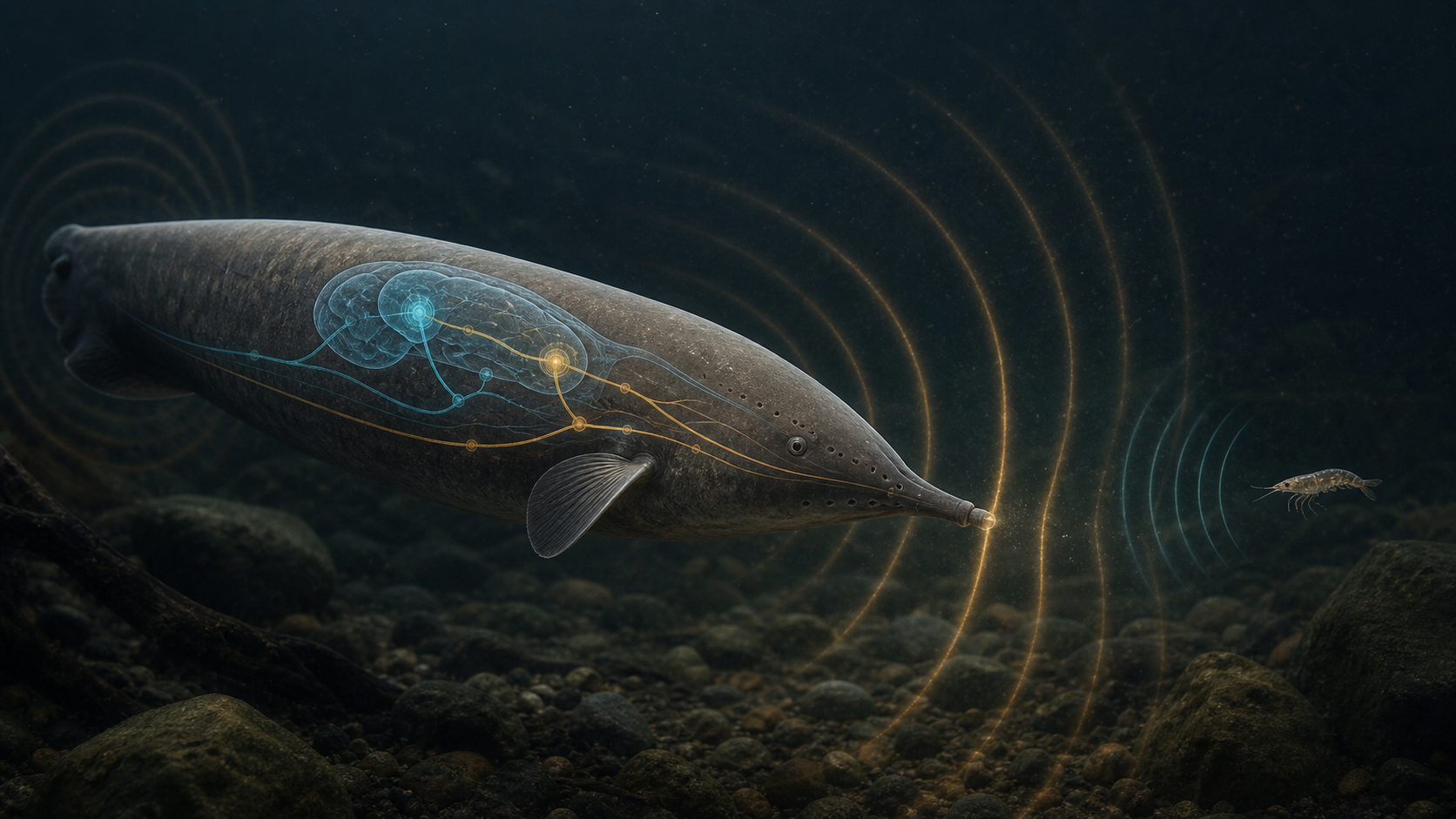
Elephant proboscis fish locate food and obstacles by emitting weak electrical pulses from their tail organs and reading the distortions returned to their skin senses. However, the pulse just released itself can overwhelm small external changes. The brain precalculates and subtracts expected input from behavior, leaving behind unexpected signals.
What did you find on the connection map?
The researchers reconstructed the cells and synaptic connections of the electrosensory lobe at high resolution using an electron microscope. Learnable connections were scattered across multiple layers of the circuit, and cells with fast plasticity were paired in a certain way with cells with slow plasticity. Inhibition/disinhibition pathways and feedback connections also affected learning speed and stability.
Why are fast and slow needed together?
If you use fast learning, you can quickly adapt to environmental changes but also follow accidental noises. If only slow learning is used, it is stable but adapts slowly to new conditions. A computational model combining the two timescales achieved both fast calibration and long-term stability, consistent with the fish’s ability to detect external signals while continuously pulsing.
Can it be used directly in AI?
Researchers believe that this could provide inspiration for the continuous learning problem of artificial intelligence, which involves losing old knowledge while learning new information. However, this study is not a test that actually improved AI performance. Follow-up engineering research must answer which algorithm will transfer the connection principles of biological circuits and whether it will be effective even when scaled up.
What are the limitations still remaining?
Although neuronal maps and physiological data provide a strong mechanistic basis, they cannot capture all stimuli and behaviors in the natural environment. It remains to be seen whether the same fast-slow pairing is used in cerebellar-like circuits in other electric fish species and mammals. The current conclusion concerns how a specialized sensory system learns and cancels out self-generated electrical noise.