WORLD NEWS
100nm, 41 hours without laser… A microscope that looks at living cells for a long time using chemical light
Chinese researchers have developed a RIED technique that creates super-resolution images with a resolution of about 100 nanometers by collecting weak light emitted from chemical reactions or bioluminescence without external laser illumination. The results of continuous observation of mitochondrial movement in living cells for up to 41 hours were introduced as a cover study in the September 3 issue of Nature.
This does not mean that all structures inside the cell were imaged in real time at 100 nanometers for 41 hours. It is a research technique that requires labeling material, luminescence reaction, imaging interval, and computational restoration, and the balance of speed and resolution varies depending on the application target.
Why did you try to remove the laser?
Fluorescence microscopy uses external light to excite the labels, but prolonged illumination can cause the labels to fade and damage the cells. Chemiluminescence and bioluminescence do not require external lighting because the reaction itself produces light. The problem was that because there were few photons, it took a long time to get a single image, and the motion information was blurred.
How to make it clearer in low light
RIED records multiple frames of luminescence signals that fluctuate over time, then combines entropy-weighted correlation and deconvolution to restore structural information. The researchers created images of organelles using three methods: electrochemiluminescence, chemiluminescence, and bioluminescence, and distinguished fine structures that were about 100 nm apart.
What did you see during the 41-hour observation?
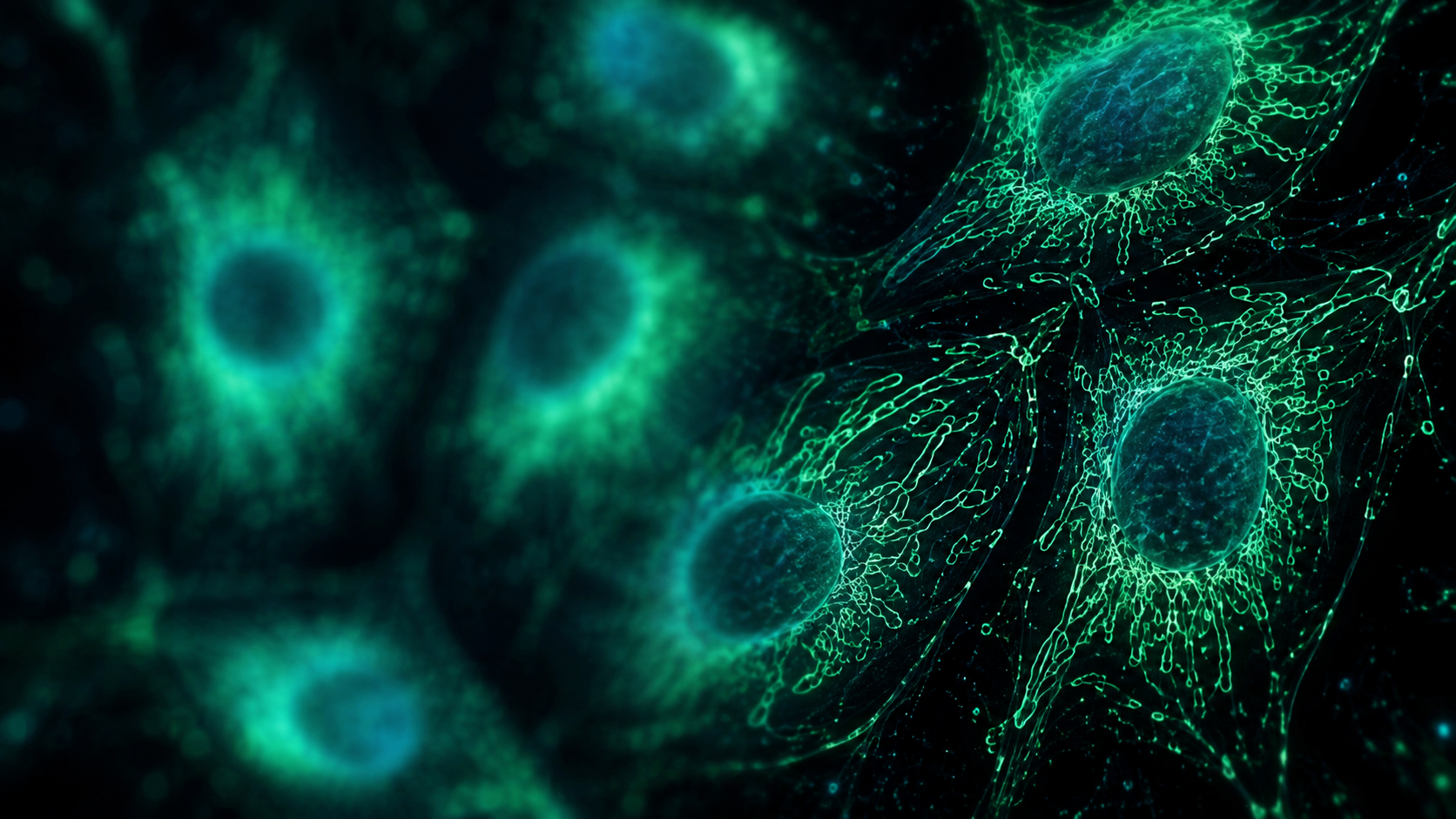
In living cells labeled with bioluminescence, we tracked the movement of mitochondria between cells over a long period of time. A distinction was made between direct, relatively straight movement and indirect movement, which is directional after a pause. This does not confirm the cause of mitochondrial movement, but rather opens a new window to observe the entire process.
Is it always better than existing super-resolution microscopes?
no. Some fluorescence techniques offer higher positioning precision or faster imaging. The advantage of RIED is that there is no external excitation light, which lowers the burden of phototoxicity and photobleaching and allows for a wide field of view and long-term observation. On the other hand, it depends on the luminescence chemistry, labeling efficiency, computational recovery and reaction conditions.
What is the next verification?
Independent reproduction is needed to ensure that the same resolution and viability is maintained in other cells and tissues, that temporal resolution is sufficient in fast-moving processes, and that reconstruction algorithms do not produce incorrect structures. Raw data and demo code have been released, but it is not yet a general-purpose clinical device.