WORLD NEWS
Young coral reef fish that grew up listening to the sound of motorboats swam toward their predators even after it quieted down
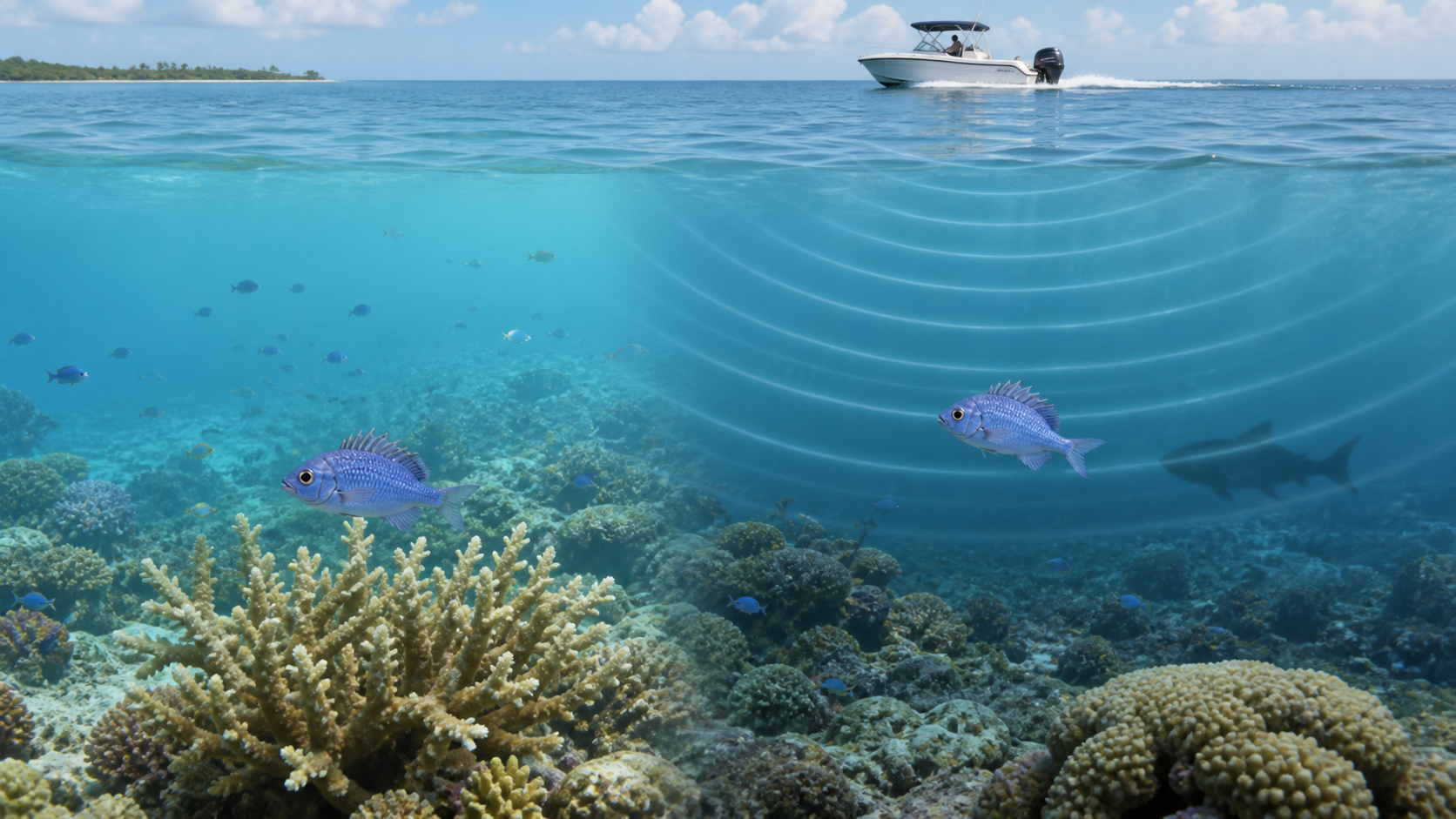
Young coral reef fish that grew up repeatedly hearing the sound of a motorboat in their tank later responded less to the predator model, even in quiet conditions, and some that did respond swam towards the predator instead. Individuals exposed to noise at an early age were smaller than those exposed to natural coral reef sounds.
This is not an actual field result showing that one tourist ship can destroy an entire coral reef fish like this. This is an aquarium experiment in which recorded sounds were played for one species of Acanthamchromis for up to 78 days, and distance, water depth, and background noise in the wild are more complex.
How did you compare?
The researchers divided pups from the same parents and placed them in conditions where natural coral reef sounds and motorboat sounds were played. Exposure to the parent/embryonic stage before hatching and the juvenile stage after hatching were combined separately. Growth and predator avoidance responses were then examined in the absence of almost any sound.
How has the flight response changed?
Individuals that heard the sound of a boat both before hatching and during juvenile life were less likely to respond to a mock attack. Even when they responded, a high proportion of them moved towards the predator rather than away from it. The boat sound was turned off at the time of testing, which resulted in a residual effect that is difficult to explain by transient startle alone.
What was the difference in growth?
Fish that heard boat sounds during juvenile life were smaller than the natural sound group, regardless of pre-hatch conditions. However, the paper did not directly translate the difference in body length between aquariums into wild survival rates or population decline numbers. Results may vary in the ocean with availability of food, water temperature, and predation pressure.
Why is life and transportation a problem?
Small motorboats are widely used for sightseeing, fishing, and transportation, and make repeated passes close to coral reefs. Sound travels far in the water and can overlap the vulnerable growth stages of young fish. Previous field studies have also shown that reducing the number and speed of boats near coral reefs increased Achychromis reproductive success.
What else should I check?
The response to each exposure dose must be replicated in other fish species and actual routes. The researchers suggested reducing boat traffic near coral reefs during the breeding season, but this paper cannot establish a uniform ban distance. Acoustic measurements and field survival tracking in each protected area are the next steps.
Primary sources and independent checks
Environmental Pollution original paper
Independent report with study details