WORLD NEWS
359 people died in Nepal border floods; the cause appears to be the collapse of not only glaciers but also bedrock.
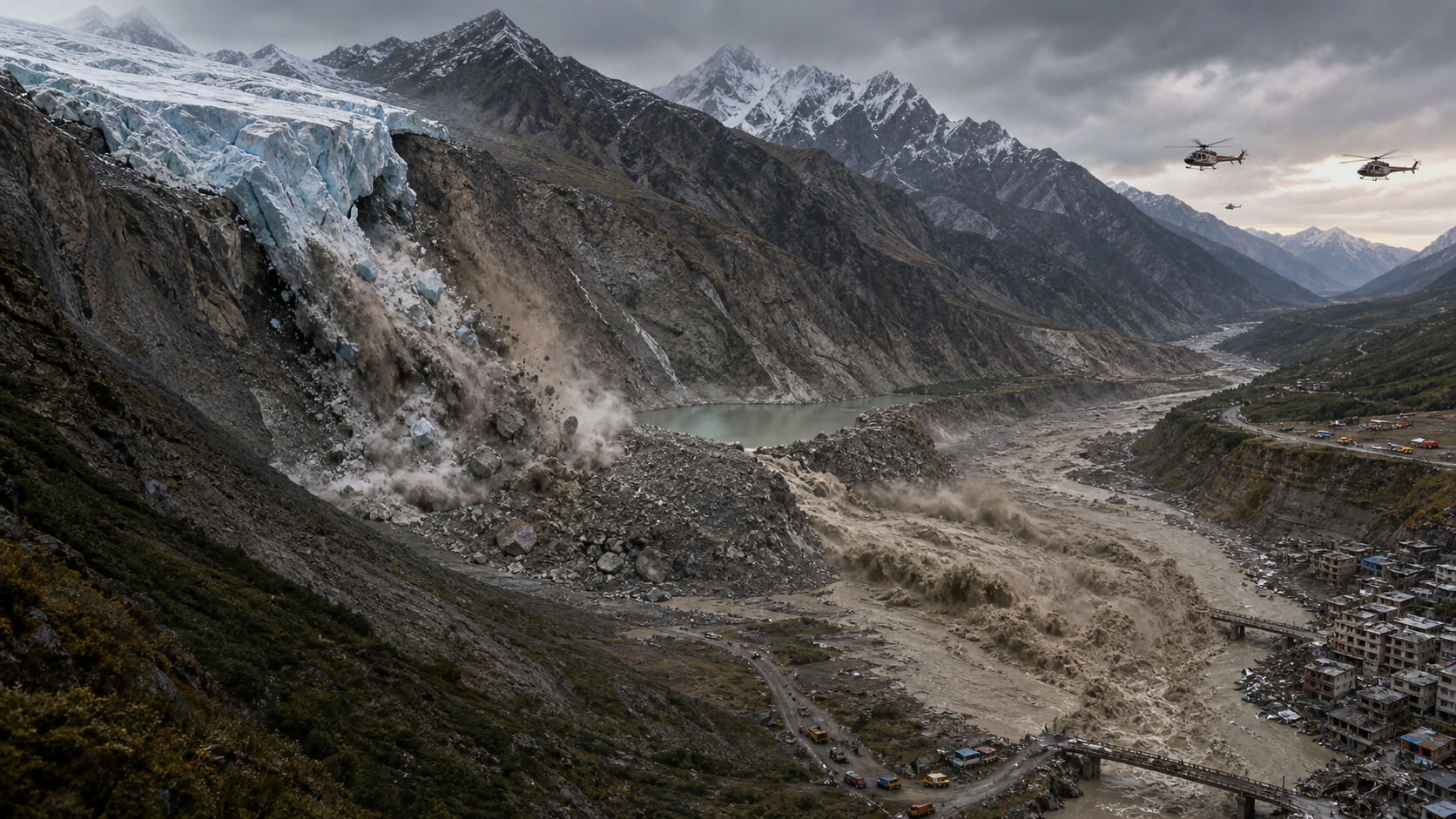
The World Meteorological Organization (WMO), citing data from the Nepal government’s disaster agency, announced that as of 6:20 p.m. on August 27, 359 bodies were recovered and 73 people were injured in connection with the flooding of the Bhotekoshi River. On the morning of August 26, huge water and mud flows hit several parts of Nepal after ice and rock collapsed in the high mountains close to Tibet, China.
The number of deaths and disappearances continues to change during the rescue process, and the scope of international reports summing up the damage on the Chinese side and the Nepal government’s tally are different. The cause has not been confirmed as a simple glacial lake overflow, but the hypothesis that the glacier and the bedrock beneath it collapsed together and blocked the river for a while before bursting is being investigated using satellite and seismic data.
what happened and when
Nepal’s Ministry of Home Affairs recorded that major flooding began in the Bhotekoshi River in Rasuwa district at 8:40 am on August 26. Not only Rasuwa, but also the river banks of Nuwakot, Dading, and Gorkha were damaged, and roads, bridges, hydroelectric facilities, and houses were damaged. Search, evacuation and medical assistance are continuing.
How did a glacier collapse lead to a flood?
Looking at early satellite images and seismic signals, researchers believe that glaciers and chunks of rock from the alpine slopes fell into the valley. Debris may have briefly blocked the river, allowing water to build up, before the temporary barrier collapsed, sending a torrent of water downstream. The first day’s video is incomplete due to clouds and dust, so the exact sequence needs to be confirmed further.
What is the number of 359 people?
The number of 359 people is a figure that WMO cited from the Nepal National Disaster Risk Reduction and Management Agency’s situation data as of 18:20 on the 27th. A Nepal embassy bulletin a few hours earlier listed 175 bodies recovered and 624 people missing from 32 countries. Even for the same incident, the numbers will vary if the reference time and collection area are different, so they should not be added together.
Can we conclude that climate change is the cause?
Warming in the Himalayas increases the risk of glacial retreat and alpine slope instability, but no study has yet attributed this single collapse to climate change. Geological structures, rock cracks, snow and precipitation, and recent temperatures must be investigated together. What has now been identified is the disaster trajectory, not the proportion of long-term causes.
What to check next
Search results and downstream risks should be checked with the latest situation tables from the Government of Nepal and WMO/ICIMOD. Scientists will reconstruct the point of initial collapse and the time of the temporary dam’s formation by combining clearer satellite images, seismic waves and site topography. Travelers and families should prioritize government emergency response outlets over social media listings.