WORLD NEWS
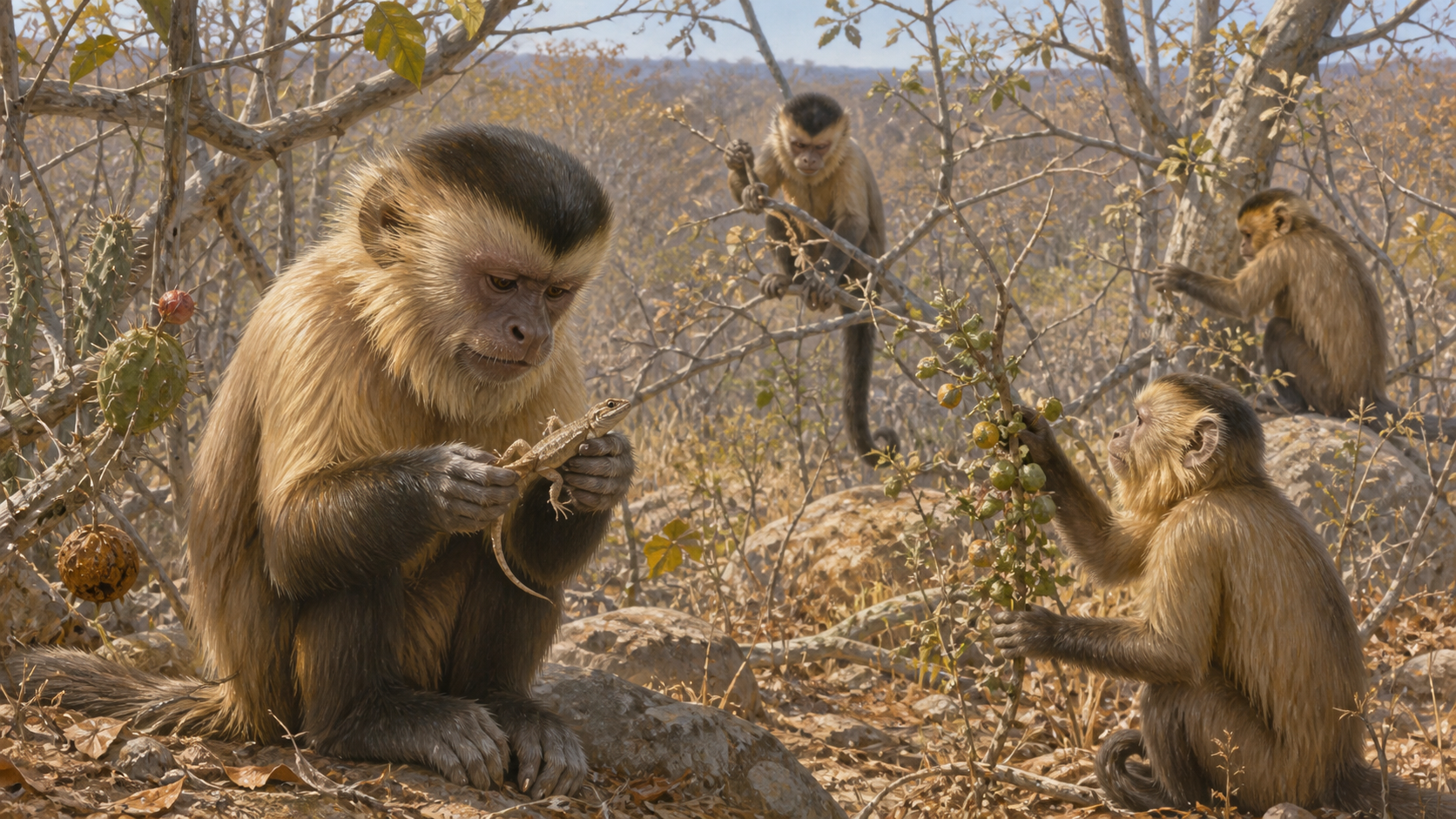
As fruit became scarce, capuchin monkeys hunted more lizards and rodents.
A 45-month study of two groups of bearded capuchin monkeys in Fazenda Boavista, Brazil, found that hunting and consumption of small vertebrates increased as fruit and plant food became more difficult to obtain. Over 5,000 hours of observation, 446 cases were recorded, with lizards accounting for 43% and rodents accounting for 28%.
This does not mean that capuchin monkeys mirror the hunting methods of our human ancestors. The data is the behavior of two groups in one region between 2006 and 2010, and the explanation that early humans followed the same path is a hypothesis that needs to be further tested with fossils and other primate data.
What and how much did you observe?
The researchers followed two groups in arid habitats in the Brazilian state of Piauí and recorded their prey selection and hunting. The 446 cases of eating small animals included lizards, rodents, snakes and nestlings. Opossum and iguana eating behavior was also recorded for the first time in this population.
How are fruit shortages and hunting connected?
Consumption of small vertebrates increased during times when plant food was difficult to find. The researchers also observed a preference for fatty brains and intestines rather than just whole meat. Although it is consistent with the interpretation that it is a flexible choice to supplement insufficient energy and nutrition, it does not directly measure intention.
Was the behavior of the male and female the same?
Males hunted more often than females and were more likely to encounter dangerous prey such as snakes. Age, size, social position and access to food can all play a role. Therefore, we cannot generalize that all capuchins hunt with the same frequency and method.
Why compare to human evolution?
It has been suggested that early humans opportunistically ate small vertebrates before regularly hunting large animals. Long-term data from capuchins provide a comparative model showing how plant food deprivation can promote such a transition. But the monkeys’ current behavior does not replace the fossil evidence.
What research should we look for next?
It remains to be seen whether plant food deprivation, sex, and nutrient deficiencies produce the same patterns in other regions and species. Analyzing traces left on the bones and teeth of prey could help trace small animal use in early human remains. The key is that long-term observations isolate seasonal changes.