WORLD NEWS
A humanoid ran 100 meters in 8.86 seconds, but it did not break the official human record.
A Chinese humanoid robot recorded a time of 8.86 seconds in the 100m at the Beijing World Humanoid Robot Championships on August 25. It is faster than the robot record of 9.39 seconds set three days ago and Usain Bolt’s human world record of 9.58 seconds.
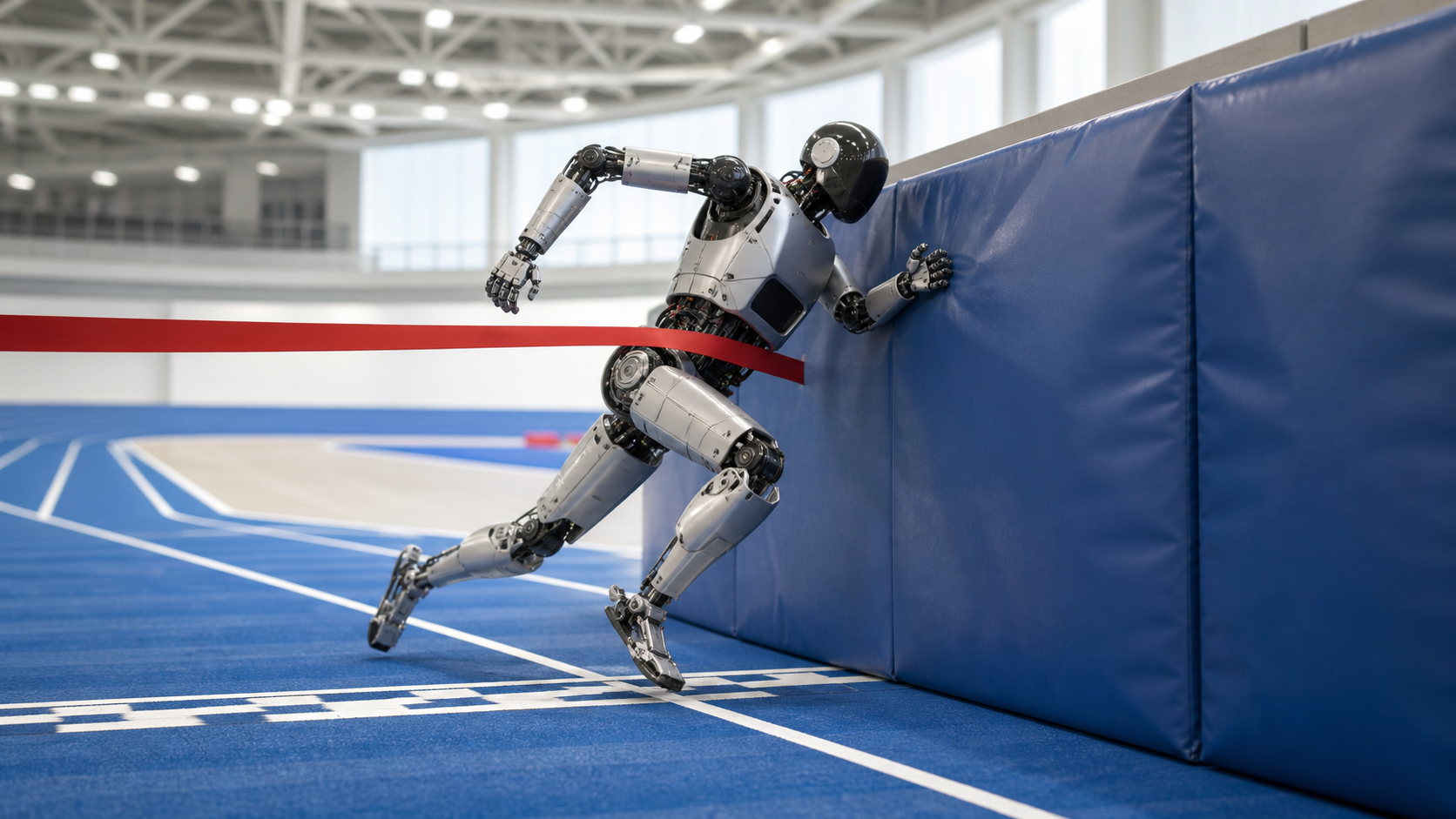
However, the human track and field world record has not been broken. It was a separate event where robots competed against each other, and the robot that set the record failed to stop behind the finish line and crashed into a protective pad. Along with speed, control and safety capabilities must also be considered.
What record came out?
The 8.86 seconds that AP confirmed on site is a new record for the robot 100m race held on August 25. The 9.39 seconds from the preliminaries on August 22nd was reduced by 0.53 seconds in three days. Compared to the human record, it is 0.72 seconds faster, but the starting rules, mechanical structure, and competition certification system are different from human track and field.
Why was what was behind the finish line more important?
The robot ran quickly and hit the protective pad, sparks visible from its waist. Competition management responded immediately. This scene shows that actual movement ability cannot be assessed based on top speed alone. When using around people, braking, regaining balance, and recognizing obstacles are just as important as recording.
What did the competition test?
In the second edition of the competition, over 2,000 robots participated and over 1,300 matches were held in 51 events. In addition to running and high jumping, scenes such as table tennis, dancing, housework, hotel service, and emergency response were also included. The sport serves as an open testing ground for easy comparison of machine performance.
Why you shouldn’t directly compare it to Bolt
People run with biological muscles and energy and follow the speed, track, doping and starting rules of the International Association of Athletics Federations. The robots are powered by motors, batteries and control software, and follow the competition’s own rules. 8.86 seconds is an impressive engineering record, but that doesn’t mean the two records are equal.
What number do you see next?
Follow-up evaluations should be made to see if you get the same amount of time on repeat runs, if you stop without falling, and how well you manage battery and heat. For real service robots, safety tests that avoid people and objects are also required. This record means that the threshold for running speed has been surpassed, but it does not mean that the general-purpose robot has been completed.