WORLD NEWS
The Sun disappears near sunset: where to see the Aug. 12 eclipse safely
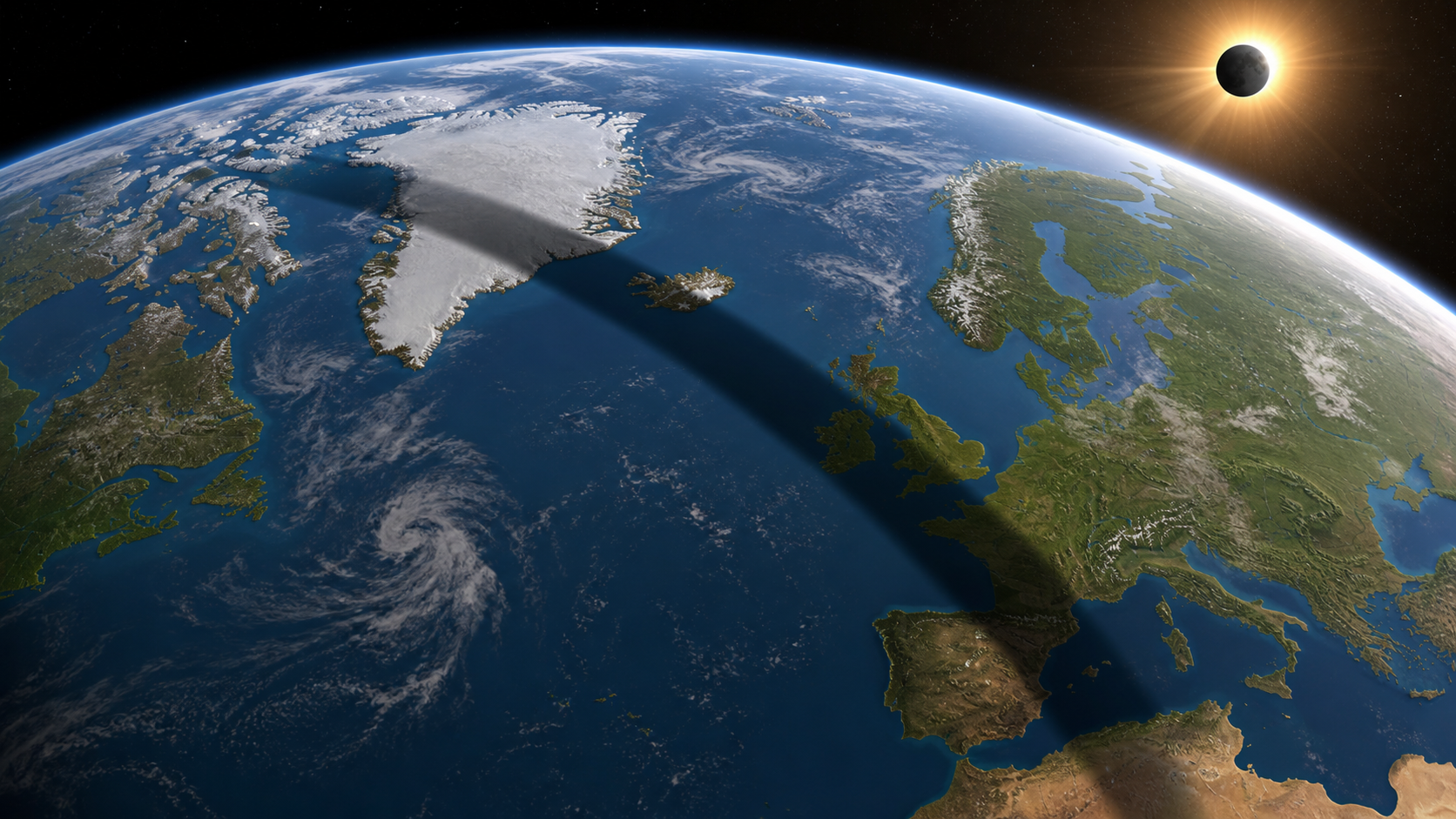
On Aug. 12, the center of the Moon’s shadow will completely cover the Sun across Greenland, Iceland, northern Russia, Spain, and a small corner of Portugal.
Korea is outside the viewing area, and everywhere beyond totality requires proper eye protection whenever any part of the Sun remains visible.
Where will totality occur?
NASA’s path runs through the Arctic and North Atlantic into Spain. Totality lasts under two minutes for most locations and under two and a half minutes even near the center.
When will cities see it?
Local totality starts around 5:48 p.m. in Reykjavík and 8:28 p.m. in León, Spain. Madrid and Barcelona reach about 99% coverage, London 91%, and Paris 92%.
In parts of Europe and northwest Africa, the Sun sets before the partial phase ends. Weather and a clear horizon will determine visibility.
How do viewers protect their eyes?
Use eclipse glasses compliant with ISO 12312-2 or an indirect projection method during every partial phase. Ordinary sunglasses are unsafe regardless of darkness.
Telescopes, binoculars, and cameras concentrate sunlight. They require a purpose-built solar filter mounted on the front of the optics.
What will NASA measure?
NASA will use a WB-57 aircraft near 50,000 feet and scientific balloons to study the solar corona and atmospheric changes. Teams in Iceland plan 80 balloon launches before, during, and after the eclipse.