WORLD NEWS
Romania blasted the Danube riverbed to feed a nuclear plant; the level rose 2 cm the next day
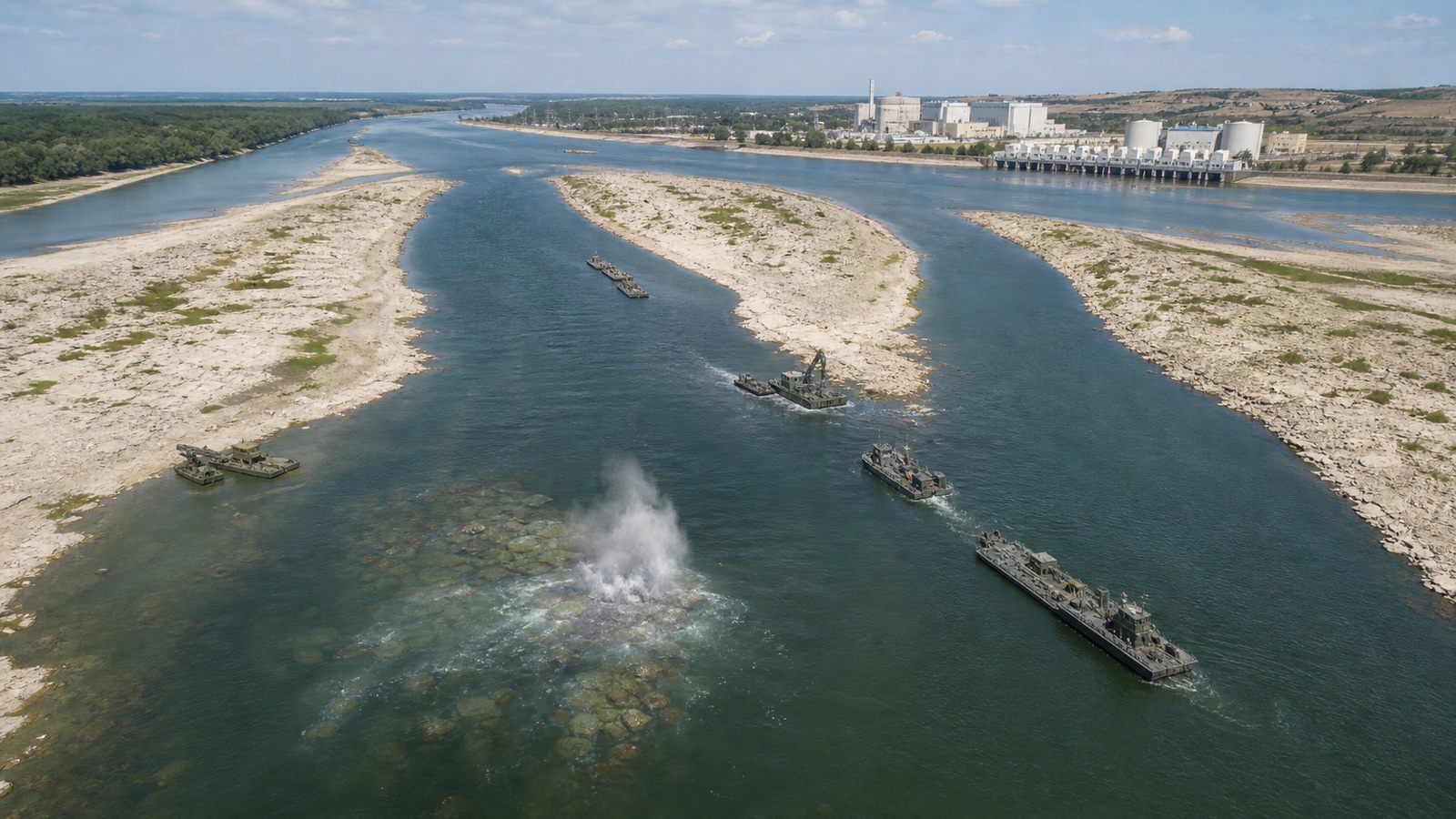
Romanian forces blasted submerged rock in the Danube on 3 August. The operation was meant to send more water through the branch that supplies the Cernavoda nuclear power plant.
The measured water level at the plant rose 2 cm the next day. One day of data cannot yet establish the blast’s full effect or a lasting answer to the drought.
Why blast the riverbed?
The Danube divides here into the Bala branch and the Old Danube branch. Cernavoda draws water from the Old Danube side. Extreme low water left too little flow going where the plant needed it.
An official Romanian Land Forces video says combat EOD divers and military engineers detonated a high-power charge against submerged rock. The goal was to increase Old Danube flow. The Defence Ministry said more than 100 service members and 16 technical assets took part over several days.
Does 2 cm count as success?
On 4 August the defence minister said the plant’s level was 2 cm higher than the day before. Because the forecast had expected a 2 cm fall, he described the operation’s net difference as at least 4 cm.
That is the government’s comparison of one reading with a forecast. Dredging, upstream rain and changing river flow can also affect the gauge. Several days of measurements are needed to learn how much of the change lasts.
Was there a nuclear accident?
No. Operator Nuclearelectrica put Unit 1 into a controlled shutdown on 28 July because of hydrological forecasts. Its filing said the safe shutdown had no impact on nuclear safety, personnel, the public or the environment.
A plant may reduce output or stop when normal cooling-water supply becomes difficult. The blast was civil engineering to preserve water access in a low river, not a response to a reactor accident.
Was this idea improvised?
Not entirely. A 2023 environmental approval described how the Parjoaia rock affects flow toward the Bala branch. A restoration plan to increase the share reaching the Old Danube had already been assessed.
That plan is larger than removing one rock. It covers the bifurcation, riverbed height, entry angle, dredging, navigation and environmental effects. The emergency blast is one part of a wider attempt to rebalance the channel.
What should be checked next?
The first question is whether the level near the plant holds for several days. Nuclearelectrica’s notices should also show when Unit 1 can restart and how the other unit is operating.
Flow speed, sediment, navigation and ecological effects downstream still require monitoring. A 2 cm rise is a striking first result, not proof that the Danube’s low-water crisis is over.
Official primary sources
Primary source: Romanian Land Forces official video of the controlled blast
Primary source: Romanian defence minister official water-level update
Primary source: Bucharest Stock Exchange / Nuclearelectrica Unit 1 shutdown notice
Primary source: Lower Danube River Administration 2023 Bala project environmental approval